
Introduction
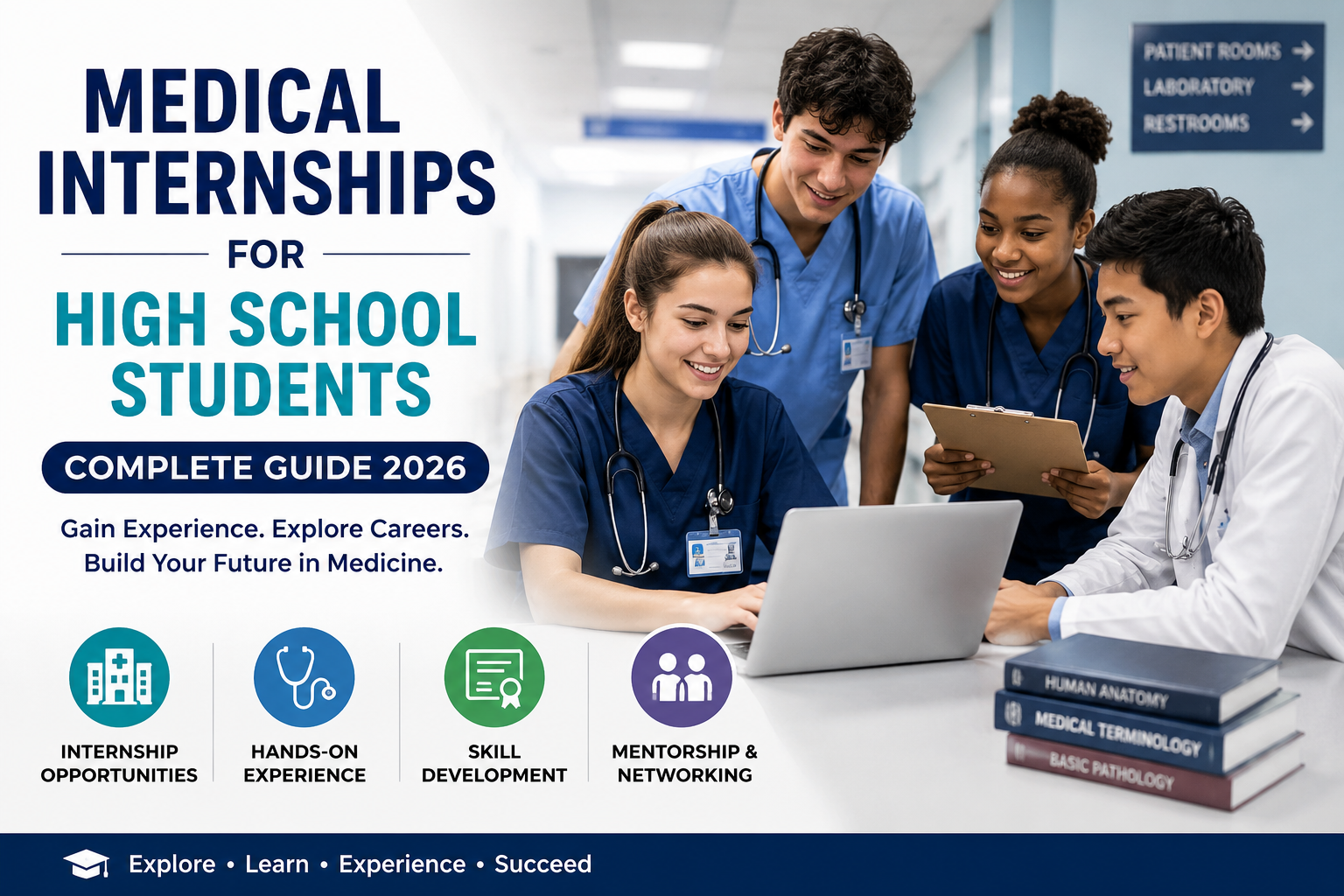
For high school students considering healthcare careers, medical internships and volunteer positions offer invaluable experience. These opportunities provide real-world exposure to medical fields, help clarify career direction, build resume credentials, and demonstrate commitment to competitive college applications.
However, securing meaningful medical internships as a high school student requires understanding what’s realistically available, where to find opportunities, how to stand out, and what to expect. Many students search vaguely without direction, missing opportunities or settling for positions lacking real medical exposure.
This comprehensive guide covers everything high school students need to know about medical internships in 2026: what opportunities exist, requirements and qualifications, how to find positions, application strategies, what to expect, how to succeed, and how to maximize the experience for college and career goals.
Understanding Medical Internship Options for High School Students
What’s Realistically Available
Important reality: Most formal “internships” for high school students aren’t titled internships. Healthcare facilities primarily offer:
Volunteer positions:
- Most common option for high school students
- No pay but valuable experience
- 10-20 hours weekly typical
- Flexible scheduling
- Various departments available
Shadowing programs:
- Following physicians or specialists
- Observational experience
- Limited hands-on work
- Often shorter duration
- More selective programs
Clinical internships:
- Fewer available for high school students
- Usually paid or stipend-based
- More competitive
- Greater responsibility
- Often through specific programs
Summer programs:
- Intensive, short-term experiences
- Often competitive and selective
- Week-long to 8-week programs
- College-prep focused
- Sometimes with educational component
Community service positions:
- Hospitals need help
- Administrative and support roles
- Less clinical than volunteer medicine
- Still valuable experience
- Good entry point
Paid vs. Unpaid Positions
Unpaid volunteer positions (most common):
- Advantage: Easier to find
- Advantage: More scheduling flexibility
- Advantage: Lower barrier to entry
- Disadvantage: No income
- Disadvantage: May feel less “official”
Paid positions (less common for high school):
- Advantage: Income and experience
- Advantage: Demonstrates competence
- Disadvantage: More competitive
- Disadvantage: Less flexibility
- Advantage: More commitment expected
Most high school students start with volunteer positions, which are abundant and accessible.
Finding Medical Internship and Volunteer Opportunities
Types of Healthcare Facilities
Hospitals:
- Large medical centers
- Community hospitals
- Specialty hospitals
- Offer diverse volunteer roles
- Most prestigious opportunities
Clinics and Medical Offices:
- Primary care clinics
- Specialty clinics
- Community health centers
- Less competitive
- More personal experience
- Often closer to home
Emergency Departments:
- High-intensity environments
- Limited high school volunteer positions
- Requires maturity and composure
- Very valuable experience if available
Research Institutions:
- University medical centers
- Research hospitals
- Competitive positions
- Valuable for science-focused students
- Often paid internships
Long-Term Care and Hospice:
- Nursing homes
- Assisted living
- Hospice organizations
- Often need volunteers
- Less competitive
- Important patient care experience
Mental Health Facilities:
- Psychiatric hospitals
- Mental health clinics
- Community mental health centers
- Important for understanding psychiatry
- Need diverse staff
Specialty Care:
- Cancer centers
- Children’s hospitals
- Rehabilitation centers
- Surgical centers
- More competitive but valuable
Online Resources for Finding Opportunities
Healthcare facility websites:
- Many hospitals list volunteer positions
- Search “volunteer” on hospital websites
- Some have online applications
- Direct contact information available
- Updates on current opportunities
Volunteer databases:
- VolunteerMatch.org: Search by location and interest
- Idealist.org: Nonprofit and healthcare positions
- YourLocalVolunteer.com: Community opportunities
- Hospital-specific portals: Many hospitals use their own systems
- United Way volunteer center: Local volunteer coordination
Professional organizations:
- AMA (American Medical Association): Resources for students
- AMSSM (American Medical Student Association): Sometimes has high school resources
- Specialty societies: Search for student opportunities
- State medical associations: Often coordinate volunteer programs
Educational platforms:
- Coursera, edX: Free courses on healthcare careers
- Khan Academy Medicine: Medical education for students
- High school guidance counselors: Often know local opportunities
- College pre-med programs: Sometimes accept high school volunteers
Networking and Direct Contact:
- Talk to doctors in your extended family
- Ask family friends in healthcare
- Contact hospital volunteer coordinators directly
- Reach out to clinics in your community
- Ask high school teachers for connections
Direct Contact Strategy
Most effective approach: Call or visit hospitals directly.
Sample script:
“Hi, I’m a [jack] high school student interested in volunteering at your hospital to explore healthcare careers. What volunteer opportunities do you have available for high school students?”
Who to contact:
- Volunteer coordinator (main point of contact)
- Human resources department
- Specific departments if interested in particular area
- Patient services
Best time to call: 9am-11am weekdays, when staff less busy
Persistence: Most applications happen after 2-3 contacts.
Requirements and Qualifications
Age Requirements
Typical minimum age: 14-16 years old
Varies by facility: Check specific hospital policies
Younger students: May have more limited positions available
Older high school students (17-18): Access to broader opportunities
Grade and Academic Requirements
Most positions require:
- Maintaining decent grades (usually B average or better)
- Some require maintaining specific GPA
- Good academic standing
Why schools care:
- Demonstrates responsibility
- Indicates maturity
- Shows commitment to learning
Health Requirements
Standard requirements for hospital volunteering:
- Physical exam or health clearance
- Tuberculosis (TB) screening (chest X-ray or TB test)
- Immunizations current (especially influenza, MMR, chickenpox)
- Sometimes additional vaccines (meningitis, hepatitis)
- Background check (standard for healthcare)
- Drug screening (sometimes for paid positions)
Timeline: Allow 2-4 weeks for health clearance completion
Cost: Usually free or low-cost through school or hospital
CPR Certification
CPR certification:
- Not always required for volunteer positions
- Required for some paid positions
- Valuable credential anyway
- Relatively inexpensive ($50-100)
- Valid for 2 years
Where to get certified:
- American Red Cross
- American Heart Association
- Many hospitals offer free training
- Community colleges
Background Check
What it includes:
- Criminal history check
- Child abuse and neglect registry check
- Sex offender registry check
- Driving history (for positions involving driving)
Cost: Usually free or paid by hospital
Important: Minor infractions usually not disqualifying; discuss with coordinator if concerned
Additional Qualifications
Helpful but not always required:
- Previous healthcare volunteer experience
- Medical certifications (CNA, EMT)
- Bilingual skills (especially Spanish)
- Patient care experience
- Demonstrated commitment to healthcare
Nice to have:
- Good attendance record
- References from teachers or mentors
- Leadership positions in clubs
- Community service background
Types of Volunteer Roles Available
Patient-Facing Positions
Patient transporter/porter:
- Move patients between departments
- Use wheelchairs, stretchers, beds
- Interact with patients
- Understand hospital logistics
- Good entry-level position
Patient visitor:
- Visit patients
- Provide companionship
- Assist with non-medical needs
- Emotional support role
- Valuable for understanding patient care
Candy striper/greeter:
- Welcome visitors
- Provide wayfinding
- Deliver flowers and gifts
- Administrative support
- Lower barrier to entry
- Less clinical exposure
Administrative Support
Front desk/reception:
- Check in patients
- Answer phones
- Schedule appointments
- Administrative experience
- Less direct patient care
Medical records:
- File and organize records
- Data entry
- Understand medical documentation
- Behind-scenes hospital work
Inventory management:
- Stock supplies
- Maintain equipment
- Organizational skills
- Logistics understanding
Clinical Exposure
Medical assistant shadow:
- Assist medical assistants
- Learn clinical procedures
- Vital signs monitoring observation
- Patient interview observation
- More direct clinical exposure
Nursing unit volunteer:
- Help nursing staff
- Observe patient care
- Non-skilled tasks
- High-value experience
- Competitive to secure
Operating room observer:
- Watch surgical procedures
- Understand surgical team dynamics
- Observe sterile technique
- Valuable but limited positions
- Most competitive option
Emergency department volunteer:
- Fast-paced environment
- Diverse patient presentations
- Critical thinking observation
- High-value experience
- Requires maturity and emotional resilience
Research and Specialized
Research assistant:
- Help with research projects
- Data collection and analysis
- Literature review
- University hospitals common source
- Valuable for science-focused students
Public health projects:
- Community health initiatives
- Health education
- Population health
- Health department volunteering
- Teaches broader healthcare perspective
Application and Interview Process
Preparing Your Application
Components typically needed:
1. Application form
- Personal information
- Emergency contact
- Health information
- Available hours/schedule
- Why interested in volunteering
- Position preferences
2. References
- Teacher or school administrator
- Coach or activity advisor
- Community leader
- Not parents usually
- Should have positive things to say
3. Resume
- For high school: simple format acceptable
- Include relevant experience
- Activities and leadership
- Awards and recognition
- Skills and certifications
- Keep to one page
Sample resume sections:
- Contact information
- Objective (one sentence about interest)
- Education
- Experience (activities, previous volunteer, work)
- Skills
- Awards
4. Essay or cover letter
- Why interested in healthcare
- Why this specific organization/department
- What you hope to learn
- How you’ll contribute
- Keep to 250-300 words
- Be authentic, not overly formal
Interview Preparation
Typical interview format:
- Phone screening (5-10 minutes)
- In-person interview (15-30 minutes)
- Sometimes group interviews
- With volunteer coordinator or supervisor
Common questions:
Tell me about yourself.
- Brief introduction, include healthcare interest
- Keep to 1-2 minutes
- Connect to healthcare and volunteering
Why are you interested in this opportunity?
- Research facility beforehand
- Mention specific aspects
- Demonstrate genuine interest
- Explain what you want to learn
Why do you want to volunteer in healthcare?
- Share genuine interest in healthcare
- Mention career exploration
- Talk about helping others
- Be honest about goals
What are your strengths?
- Reliability and responsibility
- Communication skills
- Compassion and empathy
- Ability to work as team
- Professionalism
What are your weaknesses?
- Be honest but constructive
- Mention how you’re working to improve
- Avoid saying “I’m too dedicated to work” or similar
- Show self-awareness
Tell me about a time you helped someone.
- Use specific example
- Explain situation, action, result
- Highlight empathy and action
- Keep relevant
What questions do you have?
- Ask thoughtful questions
- About training and onboarding
- About typical volunteer responsibilities
- About advancement opportunities
- Demonstrates genuine interest
Interview Tips
Preparation:
- Research the facility
- Know the volunteer role details
- Prepare honest, authentic answers
- Practice speaking aloud
- Plan what to wear (business casual)
During interview:
- Arrive 10 minutes early
- Dress professionally but age-appropriately
- Maintain eye contact
- Speak clearly and confidently
- Show enthusiasm genuinely
- Be honest about limitations
- Ask thoughtful questions
After interview:
- Send thank-you email within 24 hours
- Reiterate interest
- Keep it brief
- Show gratitude for opportunity
What to Expect: First Day and Beyond
Pre-Start Orientation
Typical orientation includes:
- Facility tour
- Safety and emergency procedures
- HIPAA training (patient privacy)
- Infection control protocols
- Reporting structure and who supervises you
- Dress code and expectations
- Schedule confirmation
- Emergency contacts
Duration: Usually 1-2 hours
Importance: Pay careful attention—you’re learning critical information.
First Week Expectations
First day often involves:
- More orientation and training
- Meeting supervisors and staff
- Observing rather than doing
- Building comfort with environment
- Asking many questions
- Feeling overwhelmed (normal!)
First week typically includes:
- Observation of tasks
- Introduction to routines
- Beginning simple tasks under supervision
- Gradually increasing responsibility
- Building relationships with staff
- Getting comfortable with environment
Common feelings:
- Nervous or anxious
- Overwhelmed by new environment
- Excited but uncertain
- Anxious about making mistakes
Normal and expected. Everyone feels this way starting.
Typical Volunteer Responsibilities
Patient-facing roles:
- Greeting and assisting patients
- Helping with wayfinding
- Delivering items (flowers, mail)
- Transporting patients between areas
- Providing companionship
- Observing patient interactions
Administrative support:
- Scheduling assistance
- Filing and organization
- Data entry
- Inventory management
- Clerical tasks
Clinical observation:
- Observing medical procedures
- Watching patient care
- Assisting with non-skilled tasks
- Learning about medical processes
- Understanding team dynamics
Building Relationships with Staff
Importance: Staff relationships make experience infinitely better.
How to build relationships:
- Show genuine interest in their work
- Ask thoughtful questions
- Be reliable and punctual
- Volunteer for additional tasks
- Show appreciation
- Learn names and use them
- Listen to stories and advice
- Ask for feedback
Benefits of good relationships:
- Better learning opportunities
- More interesting tasks
- Mentorship and guidance
- Letters of recommendation
- Professional networking
- More enjoyable experience
How to Maximize Your Experience
Learning Goals
Set specific learning objectives:
Before starting, identify what you want to learn:
- Medical terminology
- Patient care procedures
- Healthcare team dynamics
- Specific medical specialties
- Hospital operations
- Professional skills
Revisit goals periodically:
- Assess progress
- Adjust goals as interests clarify
- Pursue new learning opportunities
- Share goals with supervisors
Taking Initiative
Go beyond basic duties:
- Ask if you can help with additional tasks
- Volunteer for projects
- Offer to help with projects
- Demonstrate reliability
- Show genuine interest
Without overstepping:
- Respect your scope of practice
- Don’t pretend to have skills you lack
- Ask permission before taking on new tasks
- Understand what you can and cannot do
Seeking Mentorship
Identify potential mentors:
- Physician, nurse, or other healthcare professional
- Someone in field you’re interested in
- Someone approachable and willing to teach
- Someone whose work you admire
Building mentoring relationships:
- Ask relevant, thoughtful questions
- Show genuine interest in their work
- Respect their time
- Ask directly: “Would you be open to mentoring me?”
- Follow up on advice given
- Show appreciation
- Maintain relationship beyond volunteering
Benefits of mentors:
- Invaluable advice and guidance
- Networking and connections
- Letters of recommendation
- Career direction clarity
- Professional role models
Documentation and Reflection
Keep a volunteer journal:
- Note interesting cases (without patient names)
- Record what you learned each shift
- Reflect on patient interactions
- Document skills developed
- Note mentor advice
- Track hours and accomplishments
Benefits:
- Reinforces learning
- Provides material for essays/college applications
- Tracks growth and progress
- Useful for reflection and goal-setting
Building Relevant Skills
Technical skills to develop:
- Patient communication
- Attention to detail
- Reliability and punctuality
- Professionalism
- Teamwork and collaboration
- Problem-solving
- Compassion and empathy
Practice these:
- Every interaction is opportunity
- Treat every task seriously
- Learn from mistakes
- Seek feedback and improve
- Challenge yourself appropriately
College Application Benefits
Why Colleges Value Healthcare Volunteering
Demonstrates:
- Commitment to healthcare career
- Service and community orientation
- Maturity and responsibility
- Persistence and follow-through
- Genuine interest (not just resume padding)
- Ability to work with diverse populations
How to Leverage Experience
In college applications:
Personal essays:
- Share meaningful patient interactions
- Explain how experience clarified career goals
- Discuss what you learned about yourself
- Show growth and maturation
- Be specific and authentic
Activity section:
- List volunteer position
- Include hours (aim for 100+ for meaningful impact)
- Brief description of responsibilities
- Leadership roles if applicable
Supplemental essays:
- When asked “Why medicine?” reference specific experiences
- Mention meaningful moments from volunteering
- Explain how experience strengthened commitment
- Show self-reflection
Letters of recommendation:
- Ask supervisors or mentors for letters
- Give them resume and talking points
- Provide at least 2 weeks notice
- Follow school’s submission process
- Thank them after applications submitted
Competitive Advantage
Strong healthcare volunteering demonstrates:
- You’ve actually explored the field
- You understand what healthcare entails
- You’re serious about the commitment
- You’ve invested time and effort
- You’ve developed relevant skills
- You understand patient care
This carries weight in medical school and nursing school admissions.
Paid Internship Opportunities
Finding Paid Medical Internships
Where they’re available:
- University hospitals
- Large medical centers
- Research institutions
- Some healthcare nonprofits
- Government health agencies
- Pharmaceutical companies (sometimes)
When to apply: Spring for summer internships (apply February-March)
Summer Medical Programs
Competitive summer programs (highly selective):
AMSSM Minority Internship Program:
- For students from underrepresented minorities
- 8-week paid summer program
- Medical school preparation
- Very competitive
- Application in February
Ross Initiative in Sports for Equality (RISE):
- Sports medicine focused
- Paid internship for underrepresented students
- Summer program
- Competitive
Diversity Pipeline Programs:
- Various hospitals offer these
- Target underrepresented populations
- Often include mentorship
- Sometimes paid
- Competitive selection
How to Stand Out for Paid Positions
Requirements typically more stringent:
- High GPA (usually 3.5+)
- Leadership experience
- Previous volunteer experience
- Strong references
- Demonstrated commitment to healthcare
Application strategy:
- Apply early
- Write compelling essays
- Get strong letters of recommendation
- Demonstrate genuine interest in specific program/hospital
- Show relevant experience and skills
- Explain how program aligns with goals
Common Challenges and Solutions
Challenge #1: Limited Availability in Your Area
If you’re in rural or underserved area:
- Contact hospitals 50+ miles away
- Ask about distance volunteering
- Explore telemedicine positions
- Look for mobile clinics
- Consider summer programs requiring travel
- Volunteer for clinics that visit your area
Solution: Be flexible and creative. Video-based volunteering increasingly available.
Challenge #2: Not Getting Offered Positions
If rejections occur:
- Ask for feedback (constructively)
- Improve weak areas in application
- Start with less competitive opportunities
- Build experience before reapplying
- Get better references
- Improve grades if that’s a factor
Strategy: Build your qualifications gradually.
Challenge #3: Difficulty Balancing School and Volunteering
Time management:
- Start with fewer hours (5-10 weekly)
- Choose convenient locations
- Volunteer during less busy school times
- Communicate scheduling needs upfront
- Be realistic about your capacity
Remember: Consistent 5 hours weekly is better than inconsistent 10+ hours.
Challenge #4: Boring or Unfulfilling Tasks
Normal experience: Most volunteer work includes mundane tasks.
Reframe perspective:
- Every hospital job serves patients
- Administrative work is essential
- Observation time teaches a lot
- Use downtime to ask questions
- Request different assignments
- Talk to supervisor about learning goals
Reality check: Healthcare isn’t glamorous. Part of learning is understanding all job aspects.
Challenge #5: Emotional Difficulty With Patient Interactions
Normal: Witnessing suffering affects people.
Healthy responses:
- Talk to mentors or supervisors
- Journal about feelings
- Recognize normal emotional response
- Discuss with family or counselor if needed
- Remember compassion is strength
When to seek help:
- Persistent sadness beyond initial exposure
- Nightmares or intrusive thoughts
- Avoiding work because of emotions
- Losing interest in healthcare
Seek counselor or therapist if emotional burden becomes too heavy.
Timeline: When to Start
Recommended Timeline
Freshman (9th grade):
- Explore healthcare interests
- Take health and science classes
- Join health clubs at school
- Research volunteer opportunities
- Prepare for volunteering (get references ready)
Sophomore (10th grade):
- Apply for volunteer positions
- Start volunteering (20-50 hours during school year)
- Maintain health and volunteer certifications
- Reflect on interests
- Seek mentorship
Junior (11th grade):
- Continue volunteering (aim for 100+ total hours)
- Request letters of recommendation
- Consider summer programs or paid internships
- Deepen clinical exposure
- Clarify career direction
Senior (12th grade):
- Leverage experience in college applications
- Write about healthcare experiences
- Secure strong letters of recommendation
- Maintain volunteer commitment (if timing allows)
- Reflect on your healthcare journey
Why Start Early
Advantages of early start:
- Accumulate more meaningful hours
- Build stronger mentoring relationships
- Develop deeper understanding
- More competitive college applications
- Time to try multiple settings if first isn’t good fit
- Fewer time pressures (easier to maintain consistent hours)
Making the Most of the Experience
Networking Beyond Your Organization
Build professional network:
- Connect with healthcare professionals you meet
- Attend healthcare conferences or talks
- Join medical student organizations’ events
- Participate in healthcare clubs at school
- Follow healthcare professionals on LinkedIn
- Maintain mentor relationships
Why it matters:
- Connections lead to opportunities
- Networking builds professional skills
- Your network is your net worth professionally
- Mentors provide guidance throughout career
Exploring Different Settings
Consider volunteering in different areas:
- Hospital in first experience
- Clinic in second
- Specialty care in third
- Research institute later
Why variety matters:
- Clarifies which healthcare field interests you
- Exposes you to different aspects of healthcare
- Builds diverse skills
- Shows commitment and exploration
Reflecting on Career Direction
Use experience to clarify:
- Do you enjoy direct patient care?
- Does clinical medicine interest you?
- Are you more interested in research?
- Do you prefer specific medical specialties?
- Is healthcare truly your passion?
- What aspects energized you most?
Honest reflection:
- If healthcare isn’t right for you, that’s valuable information
- Better to discover this now than during medical school
- Use experience to refine career goals
FAQ: Medical Internships for High School Students
Q1: Do I need medical certifications to volunteer?
A: Not usually for volunteer positions. CPR certification is helpful but often not required. Basic certifications (CNA, EMT) strengthen applications but aren’t necessary to start. Check specific facility requirements.
Q2: Can I volunteer if I haven’t taken AP Biology or advanced science classes?
A: Yes. Most volunteer positions don’t require specific prerequisites. Taking science classes shows interest and helps you understand what you’re observing, but excellent student volunteers come from various academic backgrounds.
Q3: How many hours of volunteering do I need for medical school?
A: Medical schools typically look for 100+ hours minimum, though some successful applicants have 200+ hours. Quality matters more than quantity—meaningful experiences carry more weight than large hour counts from rote tasks.
Q4: Can I volunteer remotely or virtually?
A: Limited options exist, though some nonprofits offer virtual volunteering. Most healthcare volunteering requires physical presence for patient interaction. Ask facilities about virtual opportunities, especially post-pandemic.
Q5: What if I don’t want to be a doctor? Is healthcare volunteering still worth it?
A: Absolutely. Nursing, physical therapy, physician assistant, research, public health, and many other healthcare careers benefit from volunteer experience. Volunteering helps clarify which healthcare path fits you best.
Q6: Can I volunteer at multiple facilities simultaneously?
A: Yes, if you manage time effectively. Many students volunteer regularly at one facility and explore others seasonally. Ensure you maintain commitment to your primary volunteer role.
Q7: What should I wear as a healthcare volunteer?
A: Ask your facility about dress code. Most hospitals require professional appearance: closed-toe shoes, neat clothing, minimal jewelry. Many provide volunteer scrubs or vests. Dress code varies by department.
Q8: Will volunteering interfere with my grades?
A: Only if you don’t manage time well. Most successful student volunteers maintain good grades by:
- Starting with realistic hours (5-10 weekly)
- Volunteering during less demanding school periods
- Using organizational systems
- Saying no to additional commitments if necessary
- Prioritizing academics first
Q9: Can I get paid while volunteering?
A: Traditional volunteer positions are unpaid, though some facilities offer small stipends. Paid internships exist but are more competitive. Some summer programs provide stipends or scholarships.
Q10: How do I know if healthcare is right for me before committing?
A: Volunteering is specifically designed to answer this question. Try it for a few months (2-3 shifts weekly). Pay attention to whether you enjoy patient interaction, if the medical environment energizes or drains you, and if the work aligns with your values. If after genuine effort you’re unhappy, healthcare might not be your path—and that’s valuable information.
Conclusion
Medical internships and volunteer positions for high school students are more accessible than you might think. While formal “internships” with pay are competitive, volunteer opportunities abound at hospitals, clinics, and healthcare organizations nationwide. These positions offer invaluable experience exploring healthcare, building professional skills, and clarifying career direction.
Key takeaway: Start early, think strategically, and focus on quality over quantity. A consistent, meaningful volunteer experience is infinitely more valuable than sporadic hours or positions that don’t engage you.
The healthcare professionals you’ll meet, the patients you’ll help, and the experiences you’ll gain during high school volunteering can shape your entire future. Whether you ultimately pursue medicine, nursing, research, public health, or another healthcare field, these early experiences provide the foundation for understanding what it truly means to work in healthcare.
Don’t wait for perfect circumstances or until senior year. Reach out to your local hospital today. Make that phone call to the volunteer coordinator. Send that email. Your future in healthcare starts now, and the best time to begin is today.