
Introduction
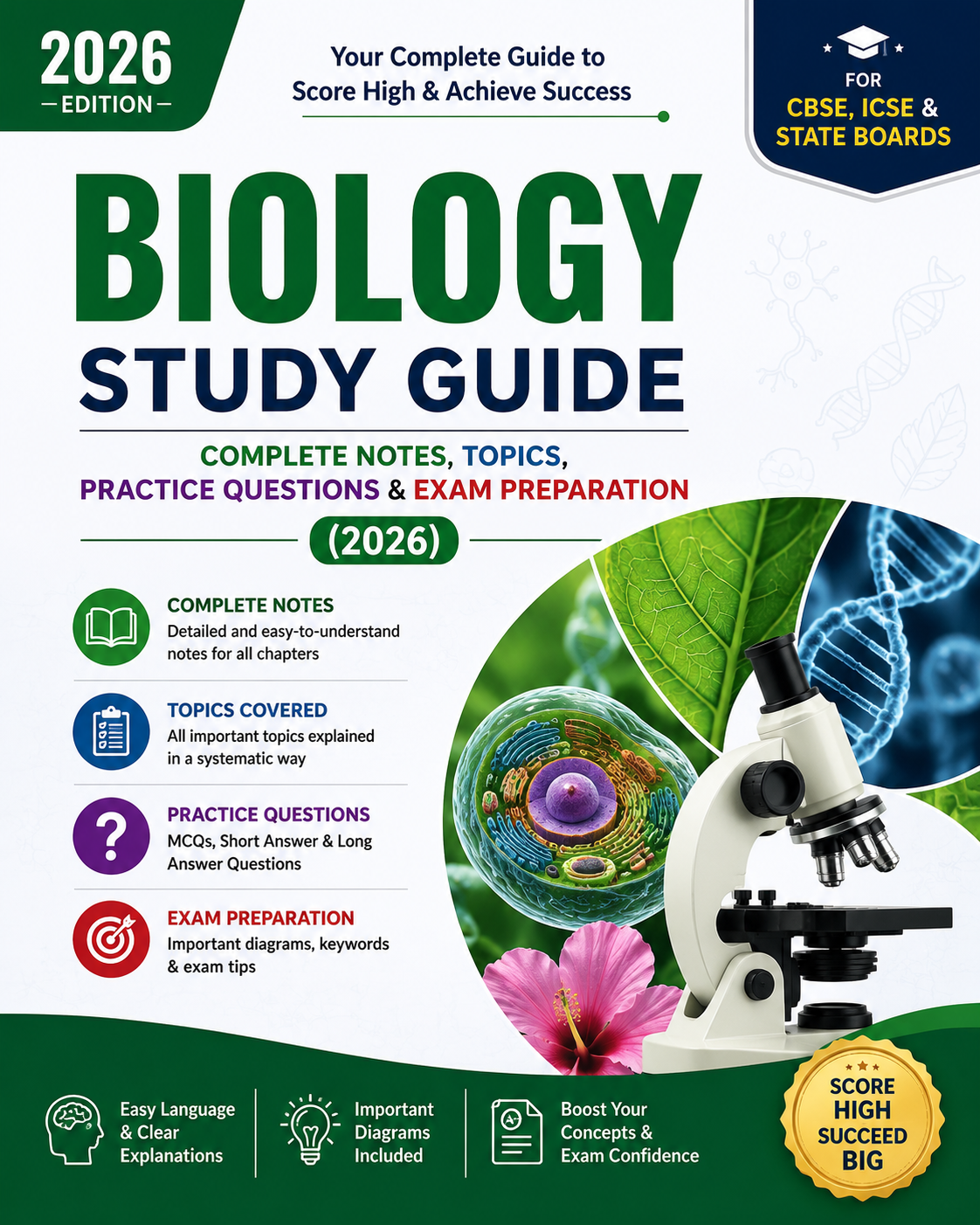
Welcome to the most comprehensive biology study guide designed to help students master every essential concept in biology. Whether you’re preparing for a school exam, a competitive test, or simply looking to strengthen your foundation in life sciences, this guide covers everything you need.
This biology study material is structured to provide clear biology notes, detailed explanations, and practical biology revision strategies that make learning easier and more effective. Biology can often feel overwhelming due to its vast scope—covering everything from microscopic cells to complex ecosystems—but with the right approach, anyone can master it.
This biology exam guide is designed for students at various levels, offering simplified explanations, structured diagrams, and practice questions that reinforce learning. We’ve organized this guide to flow logically from basic concepts to advanced topics, ensuring a smooth learning experience.
By the end of this guide, you’ll have access to complete notes on cell biology, genetics, human anatomy, plant biology, ecology, and evolution—along with practice questions and proven exam strategies. Let’s begin this comprehensive journey into the world of biology.
What Is Biology?
Definition
Biology is the scientific study of life and living organisms. It encompasses everything from the smallest single-celled bacteria to the largest whales, exploring how living things function, grow, reproduce, evolve, and interact with their environment.
The word “biology” comes from the Greek words “bios” (life) and “logos” (study), literally meaning “the study of life.” This biology definition forms the foundation for understanding all life sciences.
Importance of Biology
Understanding biology is crucial for several reasons:
- Medical advancements: Biology forms the basis of medicine, helping us understand diseases and develop treatments
- Environmental conservation: Biological knowledge helps protect ecosystems and biodiversity
- Agricultural improvements: Understanding plant and animal biology improves food production
- Personal health: Basic biological knowledge helps individuals make informed health decisions
- Technological innovation: Biotechnology and genetic engineering rely on biological principles
Branches of Biology
Biology is a vast field divided into multiple specialized branches, each focusing on different aspects of life. Understanding these branches of biology helps students appreciate the diversity within this subject.
Biology Branches
Botany
Botany is the branch of biology dedicated to studying plants, including their structure, growth, reproduction, and classification. Botanists study everything from tiny algae to massive redwood trees, exploring plant physiology, genetics, and ecology.
Zoology
Zoology focuses on the study of animals, covering their behavior, physiology, classification, and evolution. This branch spans from studying microscopic organisms to large mammals, examining animal anatomy and interactions with their environment.
Microbiology
Microbiology examines microscopic organisms including bacteria, viruses, fungi, and protozoa. This branch has become increasingly important in understanding diseases, developing vaccines, and studying beneficial microorganisms used in food production and medicine.
Genetics
Genetics explores heredity and variation in organisms, studying how traits are passed from parents to offspring through genes and chromosomes. This field has revolutionized medicine, agriculture, and our understanding of evolution.
Ecology
Ecology studies the relationships between organisms and their environment, examining ecosystems, food chains, and how species interact with each other and their surroundings.
Anatomy
Anatomy focuses on the physical structure of organisms, studying organs, tissues, and body systems. This branch is essential for understanding how living things are constructed.
Physiology
Physiology examines how living organisms function, studying the mechanisms and processes that keep organisms alive, including metabolism, respiration, and circulation.
These biology subjects work together to provide a comprehensive understanding of life in all its forms, from molecular processes to ecosystem interactions.
Cell Biology
Cell biology forms the foundation of all biological study since cells are the basic units of life. Understanding cell structure is essential for grasping more complex biological concepts.
Prokaryotic Cells
Prokaryotic cells are simple, single-celled organisms lacking a membrane-bound nucleus. Bacteria and archaea are examples of prokaryotic organisms. Key characteristics include:
- No nucleus (genetic material floats freely in cytoplasm)
- No membrane-bound organelles
- Smaller and simpler than eukaryotic cells
- Cell wall present in most prokaryotes
Eukaryotic Cells
Eukaryotic cells are more complex, containing a true nucleus enclosed by a membrane. These cells make up plants, animals, fungi, and protists. Features include:
- Membrane-bound nucleus containing genetic material
- Various membrane-bound organelles
- Larger and more complex than prokaryotic cells
- Found in multicellular organisms
Cell Organelles
Understanding cell organelles is crucial for cell biology notes. Key organelles include:
| Organelle | Function |
|---|---|
| Mitochondria | Powerhouse of the cell; produces ATP energy |
| Ribosomes | Protein synthesis |
| Endoplasmic Reticulum | Transport of materials within the cell |
| Golgi Apparatus | Packaging and shipping proteins |
| Lysosomes | Digestion of waste materials |
| Vacuoles | Storage of water, nutrients, and waste |
Cell Membrane
The cell membrane is a selectively permeable barrier surrounding the cell, controlling what enters and exits. It consists of a phospholipid bilayer with embedded proteins that facilitate transport and communication.
Nucleus
The nucleus is the control center of eukaryotic cells, containing DNA organized into chromosomes. It regulates gene expression and coordinates cellular activities.
Cytoplasm
Cytoplasm is the gel-like substance filling the cell, containing organelles and facilitating various cellular processes and chemical reactions.
Animal Cell vs Plant Cell
Understanding the differences between an animal cell and plant cell is fundamental:
Plant Cells have:
- Cell wall (made of cellulose)
- Chloroplasts (for photosynthesis)
- Large central vacuole
- Fixed, rectangular shape
Animal Cells have:
- No cell wall
- No chloroplasts
- Small vacuoles (if present)
- Flexible, irregular shape
- Centrioles (for cell division)
Cell Division
Cell division is a fundamental process allowing organisms to grow, repair tissues, and reproduce. There are two main types: mitosis and meiosis.
Mitosis
Mitosis is the process by which a single cell divides into two identical daughter cells, each containing the same genetic material as the parent cell.
Stages of Mitosis:
- Interphase: DNA has been copied before mitosis, but it still remains uncondensed inside one nucleus. The cell grows and prepares for division.
- Prophase: Chromatin condenses into visible chromosomes; nuclear membrane breaks down
- Metaphase: Chromosomes align at the cell’s equator
- Anaphase: Sister chromatids separate and move to opposite poles
- Telophase: Nuclear membranes reform around each set of chromosomes
- Cytokinesis: The cytoplasm divides, creating two separate daughter cells
Meiosis
Meiosis is a specialized form of cell division that produces gametes (sex cells) with half the number of chromosomes as the parent cell.
Stages of Meiosis:
- Interphase: DNA copies once before meiosis while chromatin stays uncondensed
- Meiosis I: Homologous chromosomes separate, reducing chromosome number by half
- Meiosis II: Similar to mitosis, sister chromatids separate
Mitosis vs Meiosis
| Feature | Mitosis | Meiosis |
|---|---|---|
| Number of divisions | One | Two |
| Daughter cells produced | Two | Four |
| Genetic identity | Identical to parent | Genetically diverse |
| Chromosome number | Same as parent | Half of parent |
| Purpose | Growth and repair | Sexual reproduction |
Understanding mitosis vs meiosis is crucial for grasping how organisms grow and reproduce, making this a key topic in any cell division study section.
Genetics
Genetics is the study of heredity, examining how traits pass from parents to offspring. This field forms the foundation for understanding evolution, disease, and biotechnology.
DNA (Deoxyribonucleic Acid)
DNA is the molecule carrying genetic instructions for the development and functioning of all living organisms. Structure includes:
- Double helix shape
- Composed of nucleotides (adenine, thymine, guanine, cytosine)
- Located in the nucleus of eukaryotic cells
- Contains genes that code for proteins
RNA (Ribonucleic Acid)
RNA plays a crucial role in protein synthesis, acting as a messenger between DNA and ribosomes. Types include:
- mRNA (messenger RNA): Carries genetic code from DNA to ribosomes
- tRNA (transfer RNA): Brings amino acids to ribosomes
- rRNA (ribosomal RNA): Forms part of ribosome structure
Genes
Genes are segments of DNA that code for specific proteins or traits. Each gene contains instructions for producing particular characteristics in an organism.
Chromosomes
Chromosomes are structures made of tightly coiled DNA, found in the nucleus. Humans have 46 chromosomes (23 pairs), with each parent contributing 23 chromosomes.
Dominant and Recessive Traits
Understanding dominant traits and recessive traits is essential in genetics:
- Dominant traits: Expressed even when only one copy of the allele is present (represented by uppercase letters, e.g., ‘B’)
- Recessive traits: Only expressed when two copies of the recessive allele are present (represented by lowercase letters, e.g., ‘b’)
This genetics study guide section helps students understand basic inheritance patterns, forming the foundation for more complex genetic concepts.
Photosynthesis
Photosynthesis is the process by which plants convert light energy into chemical energy, producing glucose and oxygen from carbon dioxide and water.
The Photosynthesis Process
The basic equation for photosynthesis is:
6CO₂ + 6H₂O + Light Energy → C₆H₁₂O₆ + 6O₂
Key components involved:
- Sunlight: Provides energy for the reaction
- CO₂ (Carbon Dioxide): Absorbed from the atmosphere through stomata
- Water: Absorbed through roots and transported to leaves
- Oxygen: Released as a byproduct
- Sugar (Glucose): Produced as stored energy for the plant
Factors Affecting Photosynthesis Rate
Light, CO₂, and water levels directly impact photosynthesis rate:
| Factor | Low Level Impact | Medium Level Impact | High Level Impact |
|---|---|---|---|
| Light | Slow photosynthesis rate | Moderate photosynthesis rate | Optimal photosynthesis rate |
| CO₂ | Limited glucose production | Improved glucose production | Maximum glucose production |
| Water | Stomata close, reducing CO₂ intake | Adequate for normal function | Optimal cellular processes |
Understanding this photosynthesis process helps students grasp how plants sustain themselves and contribute oxygen to Earth’s atmosphere, making it one of the most important topics in plant biology.
Cellular Respiration
Cellular respiration is the process by which cells break down glucose to produce ATP (energy), essential for all cellular activities.
Aerobic Respiration
Aerobic respiration occurs in the presence of oxygen and is highly efficient at producing energy.
Equation:
C₆H₁₂O₆ + 6O₂ → 6CO₂ + 6H₂O + Energy (ATP)
This process occurs in three main stages:
- Glycolysis: Glucose breaks down in the cytoplasm
- Krebs Cycle: Occurs in mitochondria, producing electron carriers
- Electron Transport Chain: Produces the majority of ATP
Anaerobic Respiration
Anaerobic respiration occurs without oxygen, producing less energy but allowing cells to function in oxygen-deprived conditions. Types include:
- Lactic acid fermentation: Occurs in muscle cells during intense exercise
- Alcoholic fermentation: Occurs in yeast, producing alcohol and CO₂
ATP Production
ATP (Adenosine Triphosphate) is the primary energy currency of cells. Aerobic respiration produces approximately 36-38 ATP molecules per glucose molecule, while anaerobic respiration produces only 2 ATP molecules.
This cellular respiration and ATP biology section is fundamental for understanding how organisms obtain and use energy for survival.
Human Body Systems
The human body consists of multiple interconnected systems working together to maintain life. Understanding these human body systems is essential for anatomy and physiology studies.
Digestive System
The digestive system breaks down food into nutrients that can be absorbed and used by the body. Key organs include:
- Mouth (mechanical and chemical digestion begins)
- Esophagus (transports food to stomach)
- Stomach (chemical digestion with acids and enzymes)
- Small intestine (nutrient absorption)
- Large intestine (water absorption and waste formation)
- Liver and pancreas (produce digestive enzymes and bile)
Respiratory System
The respiratory system facilitates gas exchange, bringing oxygen into the body and removing carbon dioxide. Components include:
- Nose and mouth (air entry points)
- Trachea (windpipe)
- Bronchi and bronchioles (air passages in lungs)
- Alveoli (site of gas exchange)
- Diaphragm (muscle controlling breathing)
Circulatory System
The circulatory system transports blood, nutrients, oxygen, and waste products throughout the body. Main components:
- Heart (pumps blood)
- Blood vessels (arteries, veins, capillaries)
- Blood (carries oxygen, nutrients, and waste)
Nervous System
The nervous system controls and coordinates body functions through electrical and chemical signals. Divided into:
- Central Nervous System (brain and spinal cord)
- Peripheral Nervous System (nerves throughout the body)
Skeletal System
The skeletal system provides structural support and protection for internal organs. Functions include:
- Support and shape
- Protection of vital organs
- Movement (with muscles)
- Blood cell production (in bone marrow)
- Mineral storage
Muscular System
The muscular system enables movement through three types of muscles:
- Skeletal muscles: Voluntary movement
- Smooth muscles: Involuntary movement (organs)
- Cardiac muscles: Heart contractions
Endocrine System
The endocrine system regulates body functions through hormones released by glands, including:
- Pituitary gland (master gland)
- Thyroid gland (metabolism regulation)
- Adrenal glands (stress response)
- Pancreas (blood sugar regulation)
Reproductive System
The reproductive system enables organisms to produce offspring, with distinct male and female systems working to create new life through specialized reproductive cells and organs.
This comprehensive human anatomy notes section provides essential knowledge for understanding how the human body functions as an integrated system.
Plant Biology
Plant biology examines the structure, function, and processes unique to plant life.
Plant Cells
Plant cells share basic eukaryotic features but include unique structures like cell walls, chloroplasts, and large vacuoles that distinguish them from animal cells.
Plant Tissues
Plants contain specialized tissue types:
- Meristematic tissue: Actively dividing cells for growth
- Permanent tissue: Mature cells with specific functions
- Dermal tissue: Outer protective covering
- Ground tissue: Fills space between other tissues
Xylem
Xylem is vascular tissue responsible for transporting water and minerals from roots to other parts of the plant. It consists of dead cells forming continuous tubes.
Phloem
Phloem transports sugars and organic nutrients produced during photosynthesis from leaves to other plant parts. Unlike xylem, phloem cells are alive.
Transpiration
Transpiration is the process of water movement through plants and its evaporation from leaves, stems, and flowers. This process helps in:
- Water and mineral transport
- Temperature regulation
- Maintaining cell turgidity
This plant structure overview provides essential knowledge for understanding how plants function and sustain themselves.
Ecology
Ecology examines relationships between organisms and their environment, studying how various life forms interact within ecosystems.
Ecosystem
An ecosystem consists of all living organisms in an area interacting with each other and their physical environment. Components include:
- Biotic factors: Living organisms (plants, animals, microorganisms)
- Abiotic factors: Non-living elements (water, sunlight, temperature, soil)
Food Chain
A food chain shows the linear sequence of organisms, each serving as a food source for the next:
Producer → Primary Consumer → Secondary Consumer → Tertiary Consumer
Example: Grass → Grasshopper → Frog → Snake → Hawk
Food Web
A food web represents multiple interconnected food chains, showing the complex feeding relationships within an ecosystem.
Biodiversity
Biodiversity refers to the variety of life forms within an ecosystem, including genetic diversity, species diversity, and ecosystem diversity. High biodiversity indicates a healthy, resilient ecosystem.
Conservation
Conservation involves protecting and preserving natural resources and biodiversity through:
- Habitat protection
- Sustainable resource use
- Endangered species protection
- Pollution reduction
This ecosystem guide section helps students understand the delicate balance of nature and the importance of environmental conservation.
Evolution
Evolution explains how species change over time through various mechanisms, forming the foundation of modern biology.
Natural Selection
Natural selection is the process by which organisms with favorable traits are more likely to survive and reproduce, passing these traits to offspring. Key principles include:
- Variation exists within populations
- Some variations provide survival advantages
- Advantageous traits become more common over generations
- This leads to gradual population changes
Adaptation
Adaptations are inherited traits that help organisms survive in their specific environments. Types include:
- Structural adaptations: Physical features (camouflage, body shape)
- Behavioral adaptations: Actions and behaviors (migration, hibernation)
- Physiological adaptations: Internal processes (venom production, temperature regulation)
Speciation
Speciation is the process by which new species form, typically through:
- Geographic isolation: Populations separated by physical barriers
- Genetic drift: Random changes in gene frequency
- Natural selection: Different environmental pressures leading to different adaptations
This evolution notes section explains fundamental concepts explaining biodiversity and the interconnectedness of all life forms.
Classification of Living Organisms
Biological classification organizes living things into hierarchical categories based on shared characteristics.
Kingdoms
Traditional classification divides organisms into kingdoms:
- Animalia: Multicellular, heterotrophic organisms
- Plantae: Multicellular, photosynthetic organisms
- Fungi: Organisms that decompose organic matter
- Protista: Simple eukaryotic organisms
- Monera: Prokaryotic organisms (bacteria)
Domains
Modern classification uses three domains:
- Bacteria: Prokaryotic organisms without a nucleus
- Archaea: Prokaryotic organisms often found in extreme environments
- Eukarya: Organisms with membrane-bound nuclei
Scientific Classification (Taxonomy)
The taxonomic hierarchy from broadest to most specific:
Domain → Kingdom → Phylum → Class → Order → Family → Genus → Species
This biological classification system helps scientists organize and study the incredible diversity of life on Earth.
Biology Formulas & Important Terms
Key Biology Terms and Definitions
| Term | Definition |
|---|---|
| Homeostasis | Maintenance of stable internal conditions |
| Metabolism | Chemical processes occurring within organisms |
| Osmosis | Movement of water across a membrane |
| Diffusion | Movement of particles from high to low concentration |
| Enzyme | Protein that speeds up chemical reactions |
| Allele | Alternative form of a gene |
| Phenotype | Observable characteristics of an organism |
| Genotype | Genetic makeup of an organism |
Common Biological Prefixes
| Prefix | Meaning | Example |
|---|---|---|
| Bio- | Life | Biology |
| Hetero- | Different | Heterotroph |
| Homo- | Same | Homozygous |
| Micro- | Small | Microorganism |
| Photo- | Light | Photosynthesis |
Common Biological Suffixes
| Suffix | Meaning | Example |
|---|---|---|
| -logy | Study of | Biology |
| -osis | Process/condition | Osmosis |
| -phyte | Plant | Xerophyte |
| -troph | Nourishment | Autotroph |
| -cyte | Cell | Leukocyte |
Biology Diagrams Students Should Know
Visual understanding is crucial in biology. Students should be familiar with these essential diagrams:
Animal Cell Diagram
Shows nucleus, mitochondria, cell membrane, cytoplasm, ribosomes, and other organelles without cell wall or chloroplasts.
Plant Cell Diagram
Illustrates cell wall, large central vacuole, chloroplasts, along with standard organelles found in animal cells.
Heart Diagram
Displays four chambers (two atria, two ventricles), valves, and major blood vessels (aorta, vena cava, pulmonary arteries/veins).
Brain Diagram
Shows major regions including cerebrum, cerebellum, brainstem, and their respective functions in controlling body activities.
Digestive System Diagram
Illustrates the complete pathway from mouth to anus, showing all organs involved in food processing and nutrient absorption.
Flower Diagram
Displays reproductive parts including petals, sepals, stamen (anther and filament), and pistil (stigma, style, ovary).
Leaf Diagram
Shows internal structure including epidermis, mesophyll layers, stomata, and vascular bundles (xylem and phloem).
Biology Practice Questions
20 Multiple Choice Questions (MCQs)
- What is the powerhouse of the cell?
a) Nucleus b) Mitochondria c) Ribosome d) Golgi apparatus - Which process converts light energy into chemical energy?
a) Respiration b) Photosynthesis c) Transpiration d) Digestion - How many chromosomes do humans have?
a) 23 b) 44 c) 46 d) 48 - Which organelle is responsible for protein synthesis?
a) Mitochondria b) Ribosome c) Lysosome d) Vacuole - What type of cell division produces gametes?
a) Mitosis b) Meiosis c) Binary fission d) Budding - Which system transports oxygen throughout the body?
a) Digestive b) Respiratory c) Circulatory d) Nervous - What is the basic unit of heredity?
a) Chromosome b) Gene c) DNA d) Cell - Which tissue transports water in plants?
a) Phloem b) Xylem c) Epidermis d) Cortex - What is the study of heredity called?
a) Ecology b) Genetics c) Anatomy d) Physiology - Which gas is released during photosynthesis?
a) Carbon dioxide b) Nitrogen c) Oxygen d) Hydrogen - What are organisms that produce their own food called?
a) Consumers b) Decomposers c) Producers d) Predators - Which blood cells fight infections?
a) Red blood cells b) White blood cells c) Platelets d) Plasma - What is the process by which cells break down glucose for energy?
a) Photosynthesis b) Respiration c) Digestion d) Excretion - Which structure controls cell activities?
a) Cytoplasm b) Cell membrane c) Nucleus d) Vacuole - What is the study of animals called?
a) Botany b) Zoology c) Ecology d) Genetics - Which molecule carries genetic information?
a) RNA b) Protein c) DNA d) Lipid - What is a group of similar cells performing a specific function called?
a) Organ b) Tissue c) System d) Organism - Which kingdom includes bacteria?
a) Plantae b) Animalia c) Fungi d) Monera - What is the process of water loss through leaves called?
a) Photosynthesis b) Respiration c) Transpiration d) Absorption - Which system includes the brain and spinal cord?
a) Circulatory b) Nervous c) Endocrine d) Skeletal
Answers: 1-b, 2-b, 3-c, 4-b, 5-b, 6-c, 7-b, 8-b, 9-b, 10-c, 11-c, 12-b, 13-b, 14-c, 15-b, 16-c, 17-b, 18-d, 19-c, 20-b
10 Short Answer Questions
- Define homeostasis and explain its importance.
- What is the difference between prokaryotic and eukaryotic cells?
- Explain the role of enzymes in biological reactions.
- Describe the function of the cell membrane.
- What are the main stages of mitosis?
- Explain the difference between DNA and RNA.
- What is the significance of photosynthesis for life on Earth?
- Describe the structure and function of mitochondria.
- What is natural selection, and how does it drive evolution?
- Explain the difference between a food chain and a food web.
5 Long Answer Questions
- Explain in detail the process of photosynthesis, including the role of chlorophyll, light reactions, and the Calvin cycle.
- Describe the human digestive system, explaining the function of each major organ involved in digestion.
- Compare and contrast mitosis and meiosis, explaining their significance in growth, repair, and reproduction.
- Discuss the concept of natural selection and provide examples of how it has led to adaptations in various species.
- Explain the structure and function of DNA, including how genetic information is transmitted from parents to offspring.
Biology Exam Preparation Tips
Revision Strategy
Effective revision requires a structured approach:
- Create a study schedule: Allocate specific time for each topic, ensuring comprehensive coverage
- Active recall: Test yourself regularly instead of passive reading
- Spaced repetition: Review material at increasing intervals to improve retention
- Concept mapping: Create visual diagrams connecting related concepts
- Group study sessions: Discuss difficult topics with classmates for better understanding
Flashcards
Flashcards are excellent tools for memorizing key terms, definitions, and processes:
- Create cards for important vocabulary
- Include diagrams on cards where applicable
- Review flashcards during short breaks
- Use apps like Anki for digital flashcard systems
- Test yourself regularly using flashcard sets
Mnemonics
Mnemonics help remember complex biological sequences and lists:
- Taxonomy order: “Dear King Philip Came Over For Good Soup” (Domain, Kingdom, Phylum, Class, Order, Family, Genus, Species)
- Cell division phases: “IPMAT” (Interphase, Prophase, Metaphase, Anaphase, Telophase)
- DNA bases pairing: “A-T, C-G” (Adenine-Thymine, Cytosine-Guanine)
Past Papers
Practicing with past examination papers offers several benefits:
- Familiarizes you with exam format and question types
- Helps identify frequently tested topics
- Improves time management skills
- Builds confidence through repeated practice
- Highlights areas requiring additional study
Biology Study Resources
Recommended Textbooks
Quality textbooks provide comprehensive coverage of biological concepts:
- Campbell Biology (comprehensive reference)
- NCERT Biology textbooks (for board exam preparation)
- Molecular Biology of the Cell (advanced cellular studies)
- Concepts of Biology (introductory level)
Flashcards
Digital and physical flashcard resources:
- Anki (spaced repetition software)
- Quizlet (pre-made and custom flashcard sets)
- Physical index cards for offline study
Practice Worksheets
Regular practice through worksheets reinforces learning:
- Chapter-end questions from textbooks
- Online worksheet generators
- Previous years’ exam papers
- Topic-specific practice sheets
Revision Schedules
Structured revision schedules ensure comprehensive coverage:
- Weekly topic breakdown
- Daily practice question targets
- Monthly full-syllabus review
- Pre-exam intensive revision period
Frequently Asked Questions
Q1: What is biology?
Biology is the scientific study of living organisms, examining their structure, function, growth, evolution, and interactions with their environment.
Q2: How do I study biology faster?
Focus on understanding concepts rather than memorizing facts, use visual aids like diagrams, practice active recall, and connect new information to previously learned material.
Q3: What are the branches of biology?
Major branches include botany, zoology, microbiology, genetics, ecology, anatomy, and physiology, each focusing on different aspects of living organisms.
Q4: Is biology difficult?
Biology’s difficulty varies by individual, but breaking down complex topics into smaller sections, using visual learning tools, and practicing regularly makes it manageable.
Q5: How can I memorize biology terms?
Use flashcards, create mnemonics, practice active recall, teach concepts to others, and connect terms to real-life examples for better retention.
Q6: What topics are most important in biology?
Cell biology, genetics, human anatomy, ecology, and evolution form the core foundation topics essential for understanding advanced biological concepts.
Q7: How do I prepare for a biology exam?
Create a structured study schedule, practice with past papers, use active recall techniques, form study groups, and focus on understanding rather than memorization.
Q8: What are the best biology books?
Campbell Biology, NCERT textbooks, and Molecular Biology of the Cell are excellent resources depending on your academic level.
Q9: What is the difference between mitosis and meiosis?
Mitosis produces two identical diploid cells for growth and repair, while meiosis produces four genetically diverse haploid cells for reproduction.
Q10: How does photosynthesis work?
Plants use sunlight, water, and carbon dioxide to produce glucose and oxygen through chlorophyll-containing chloroplasts in their cells.
Q11: What is DNA?
DNA (Deoxyribonucleic Acid) is a molecule containing genetic instructions for the development and functioning of all living organisms.
Q12: What are the main human body systems?
Major systems include digestive, respiratory, circulatory, nervous, skeletal, muscular, endocrine, and reproductive systems.
Q13: What is natural selection?
Natural selection is the process where organisms with favorable traits survive and reproduce more successfully, passing these traits to future generations.
Q14: How many kingdoms of life are there?
Traditional classification recognizes five kingdoms: Animalia, Plantae, Fungi, Protista, and Monera.
Q15: What is an ecosystem?
An ecosystem consists of all living organisms interacting with each other and their physical environment within a specific area.
Q16: What is cellular respiration?
Cellular respiration is the process by which cells break down glucose to produce ATP energy, occurring through aerobic or anaerobic pathways.
Q17: What are chromosomes?
Chromosomes are structures made of tightly coiled DNA found in the nucleus, carrying genetic information organized into genes.
Q18: How do plants transport water?
Plants transport water through xylem tissue, using processes including root pressure, capillary action, and transpiration pull.
Q19: What is biodiversity?
Biodiversity refers to the variety of life forms within an ecosystem, including genetic, species, and ecosystem diversity.
Q20: Why is biology important for everyday life?
Biology helps us understand our bodies, make informed health decisions, understand environmental issues, and appreciate the natural world around us.
Conclusion
This comprehensive biology study guide has covered essential topics ranging from basic cell biology to complex ecological systems, providing students with a solid foundation for academic success. From understanding cellular structures and genetic inheritance to exploring human body systems and evolutionary processes, this guide serves as a complete resource for biology education.
Remember that mastering biology requires consistent practice, active engagement with the material, and regular review of key concepts. Use the practice questions, diagrams, and study tips provided throughout this guide to reinforce your learning and prepare effectively for examinations.
Biology is not just an academic subject—it’s the key to understanding life itself, from the smallest cellular processes to the complex interactions within ecosystems. By approaching your studies with curiosity and dedication, using concept-based learning rather than rote memorization, you’ll develop both the knowledge and critical thinking skills necessary for success.
Continue practicing with the questions provided, create your own study materials using the strategies outlined, and don’t hesitate to revisit challenging topics multiple times. With consistent effort and the right study techniques, mastering biology becomes an achievable and rewarding goal.
Keep this guide handy for quick revision, use it alongside your textbooks and class notes, and remember that understanding concepts deeply will serve you better than memorization alone. Good luck with your biology studies and exam preparation!