
Introduction
Great teachers change lives. They inspire curiosity, build confidence, ignite passions, and shape futures. While many people can deliver information, truly effective teachers possess specific qualities that go far beyond subject matter expertise. These educators create environments where students thrive academically and personally.
If you’re a student, you’ve likely noticed the stark difference between exceptional teachers and merely adequate ones. An excellent teacher can make a challenging subject engaging and understandable, while a poor teacher can make even interesting topics feel tedious and confusing. If you’re an educator, understanding the qualities that make teachers effective helps you continuously improve your craft and positively impact more students.
Research in educational psychology consistently identifies the same characteristics in the world’s most effective teachers. These aren’t mysterious talents—they’re skills and attributes that educators can develop and strengthen throughout their careers. When teachers embody these qualities, student engagement increases, achievement improves, and classroom culture transforms.
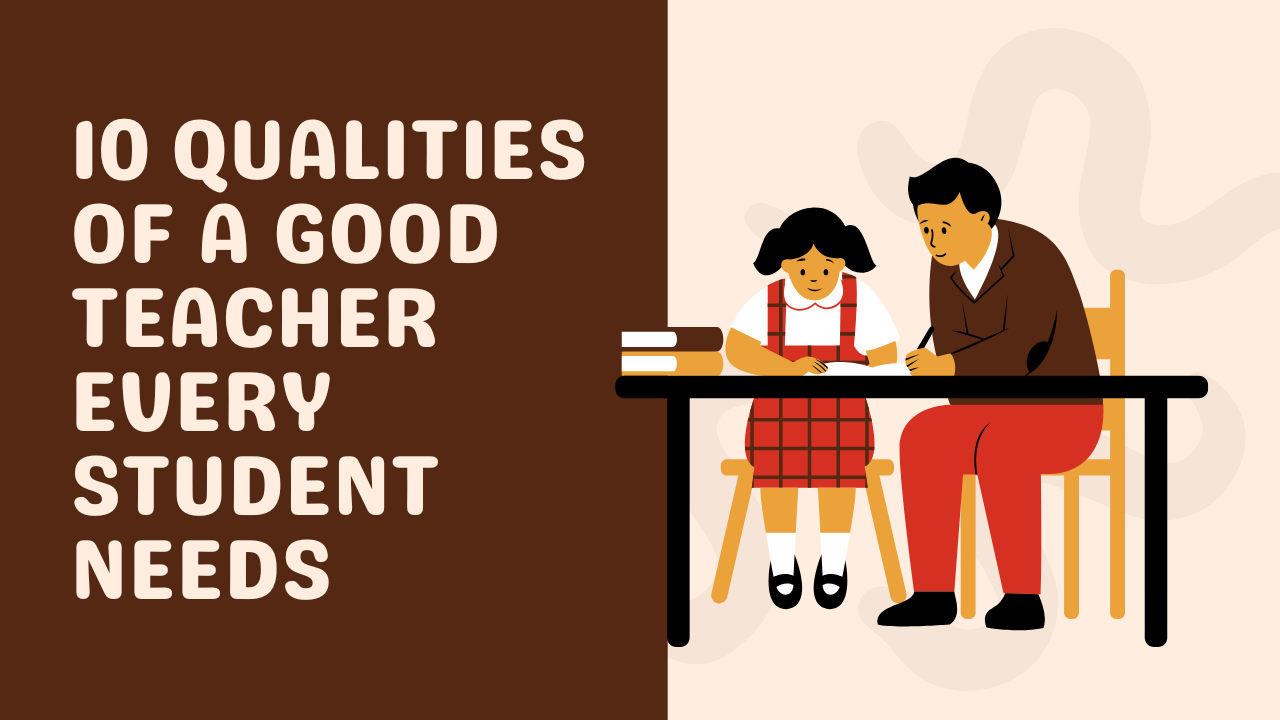
This comprehensive guide explores the 10 essential qualities of good teachers, explaining why each matters and how they manifest in the classroom. Whether you’re evaluating your own teachers, aspiring to become an educator, or looking to improve your teaching, understanding these qualities illuminates what truly makes the difference in education.
What Makes a Good Teacher?
Before examining individual qualities, let’s establish what defines teaching excellence. A good teacher:
- Facilitates learning rather than merely delivering information
- Inspires and motivates students to engage and persist
- Creates safe, inclusive environments where all students feel valued
- Adapts to diverse learner needs rather than using one-size-fits-all approaches
- Builds meaningful relationships with students and families
- Models lifelong learning and intellectual curiosity
- Holds high expectations while providing support to meet them
- Uses evidence-based practices to maximize student achievement
- Continuously reflects and improves their practice
- Genuinely cares about student success and wellbeing
The qualities explored in this guide collectively create these outcomes. They work synergistically—each quality strengthens and supports the others.
1. Passion for Teaching and Subject Matter
The most memorable teachers share an infectious enthusiasm for what they teach. Passion is contagious; students catch it from teachers who genuinely love their subjects and care about helping others learn.
What Passion Looks Like in the Classroom
Genuine enthusiasm: Passionate teachers’ excitement is authentic, not performed. They light up when discussing concepts, ask engaging questions, and create activities reflecting their love of the subject.
Going beyond requirements: These teachers supplement curriculum with real-world examples, current events, and applications. They bring in guest speakers, take field trips, and create projects extending beyond textbooks.
Willingness to learn: Passionate teachers stay current with their fields, read professional journals, attend conferences, and continuously update their knowledge. They model that learning never stops.
Personal connection: They share why the subject matters to them personally. A literature teacher might discuss how a novel changed their perspective; a science teacher might explain childhood moments inspiring their career.
Persistence with difficult topics: Rather than rushing through challenging material, passionate teachers find creative ways to make it accessible and interesting.
Why Passion Matters
Research shows that teacher enthusiasm strongly predicts student achievement, engagement, and motivation. Students are more likely to:
- Pay attention and participate actively
- Invest effort in learning
- Develop genuine interest in subjects
- Persist through difficulties
- Develop positive attitudes toward learning
Conversely, students quickly disengage when teachers seem bored or disinterested. Even brilliant content falls flat if delivered without passion.
What Students Say
“My best teacher made chemistry exciting. She told us why she loved it, shared cool experiments, and actually cared if we understood. I ended up majoring in chemistry because of her passion.”
2. Strong Communication Skills
Excellent teachers are exceptional communicators who explain concepts clearly, ask probing questions, listen actively, and adjust their communication based on student understanding.
Clear Explanations
Good teachers break complex topics into understandable components:
- Use concrete examples before abstract concepts
- Explain the “why” not just the “what”
- Avoid jargon or define it clearly
- Use multiple modalities (verbal, visual, written, kinesthetic)
- Check understanding frequently
- Rephrase and explain differently if students don’t understand
Active Listening
Great teachers truly listen to students:
- Make eye contact and give full attention
- Ask follow-up questions to understand student thinking
- Don’t interrupt or dismiss student ideas
- Take student concerns seriously
- Remember details students share
- Create space for student voices
Effective Questioning
Rather than lecturing exclusively, excellent teachers ask questions that:
- Prompt critical thinking
- Probe deeper understanding
- Reveal misconceptions
- Engage students in discussion
- Have multiple possible answers
- Connect to student experiences
Non-Verbal Communication
Effective teachers communicate volumes through:
- Facial expressions showing they care
- Open body language inviting participation
- Proximity (moving around classroom rather than staying behind desk)
- Eye contact showing individual attention
- Enthusiasm in tone and energy
Written Communication
Clear written communication matters:
- Assignment instructions are specific and unambiguous
- Feedback on work is constructive and actionable
- Syllabus and expectations are clearly outlined
- Emails and communications are professional yet warm
Why Communication Matters
When teachers communicate clearly, students:
- Understand concepts more readily
- Feel heard and valued
- Engage more actively in discussions
- Ask questions rather than staying silent
- Develop stronger relationships with teachers
Unclear communication creates confusion, frustration, and disengagement. When students don’t understand, they either give up or resent the teacher for failing to explain adequately.
What Students Say
“Mr. Johnson explains things so clearly. When I don’t understand, he explains it differently until it clicks. He never makes me feel stupid for asking questions.”
3. Genuine Care and Empathy
Students need to know their teachers care about them as whole people, not just grade-producing machines. Genuine care and empathy create trust, psychological safety, and motivation.
Showing You Care
Excellent teachers demonstrate care through:
- Learning and using student names
- Remembering personal details students share
- Asking about students’ lives, interests, and wellbeing
- Noticing when students seem upset or stressed
- Celebrating successes (academic and personal)
- Checking in with students struggling academically or emotionally
- Attending school events where students perform or compete
Empathy and Understanding
Empathetic teachers:
- Try to understand student perspectives and challenges
- Recognize that life circumstances affect school performance
- Provide flexibility and support when students face difficulties
- Don’t assume negative intent
- Treat students with dignity and respect even when frustrated
- Remember struggling with subjects themselves
- Avoid humiliation or sarcasm
Student Wellbeing Priority
Teachers who genuinely care prioritize student wellbeing:
- Make mental health and basic needs (sleep, food, safety) priorities
- Know when students need referral to counselors or support services
- Create environments where students feel safe and accepted
- Don’t punish students for circumstances beyond their control
- Advocate for students’ needs
Why Care Matters
When students feel genuinely cared for:
- They’re more motivated and engaged
- They take more risks academically (ask questions, try difficult problems)
- They persist through frustration
- They develop resilience
- They feel safe being vulnerable and admitting confusion
- They trust teacher feedback and guidance
- They’re more likely to seek help rather than give up
Research shows that perceived teacher care is one of the strongest predictors of student engagement and achievement.
What Students Say
“My teacher actually knows me. She asked about my soccer tournament and remembered my mom was sick last week. She cares about me as a person, not just a student.”
4. High Expectations Combined with Support
Excellent teachers believe in their students’ abilities and maintain high expectations—while simultaneously providing the support necessary for students to meet those expectations. This balance is critical.
Setting High Expectations
Teachers with high expectations:
- Believe all students can learn and grow
- Refuse to accept “I can’t” without exploring deeper
- Challenge students to reach beyond comfort zones
- Assign rigorous, meaningful work
- Don’t lower expectations based on student demographics
- Create rubrics showing excellence
- Provide feedback focused on improvement
Providing Support
Teachers balance high expectations with support:
- Break challenging tasks into manageable steps
- Provide scaffolding and gradually remove it
- Offer multiple attempts and revision opportunities
- Give specific, actionable feedback
- Provide additional resources and help
- Check understanding frequently
- Adjust pace and methods to meet student needs
- Don’t remove challenge, but provide pathway to success
Growth Mindset
Excellent teachers foster growth mindset—belief that abilities develop through effort:
- Praise effort and strategy, not intelligence
- Treat mistakes as learning opportunities
- Share their own mistakes and learning
- Provide opportunities to revise and improve
- Use language like “not yet” instead of “can’t”
- Focus on progress rather than perfection
The Goldilocks Zone
Research shows learning happens in the “zone of proximal development”—tasks just challenging enough to require growth but not so difficult as to cause frustration. Excellent teachers consistently hit this balance.
Why Expectations Matter
When teachers maintain high expectations with support:
- Student achievement increases significantly
- Students develop confidence and resilience
- Students internalize high standards
- Disparities in achievement based on demographics decrease
- Students develop persistence
- Students believe in their own capabilities
Conversely, low expectations become self-fulfilling prophecies. Students perform at the level expected of them.
What Students Say
“My teacher doesn’t let me off easy. She pushes me to do better and won’t accept sloppy work. But she helps me improve. She believes I can do it, so I believe it too.”
5. Patience and Emotional Regulation
Teaching requires patience—waiting for students to process, handling repetitive questions, managing frustrating behaviors. Excellent teachers maintain composure and patience, creating calm classroom environments.
Demonstrating Patience
Patient teachers:
- Answer the same question multiple times without irritation
- Wait for students to formulate responses rather than providing immediate answers
- Allow processing time without filling silence
- Remain calm when students make mistakes
- Don’t rush learners needing more time
- Manage their own frustration rather than expressing anger at students
- Recognize patience as a strength, not a weakness
Emotional Regulation
Excellent teachers regulate their emotions:
- Don’t take student misbehavior personally
- Respond thoughtfully rather than react emotionally
- Maintain calm tone even when frustrated
- Model healthy ways to manage stress and emotion
- Separate the student from the behavior
- Address misbehavior without shaming or humiliating
Creating Calm Environments
Patient, emotionally regulated teachers create calm classrooms where:
- Students feel safe taking risks
- Mistakes feel acceptable rather than shameful
- Stress and anxiety are reduced
- Students pay attention better
- Learning is more effective
Why Patience Matters
Students, especially struggling learners and those with behavioral challenges, need patience:
- Anxiety decreases in calm environments
- Learning improves when students feel safe
- Self-regulation develops through modeling
- Students respond better to patient instruction
- Relationships strengthen when students feel accepted
- Students are less likely to act out when treated patiently
Impatient teachers create anxious, defensive students who withdraw or act out.
What Students Say
“When I don’t understand something, my teacher explains it again without making me feel dumb. She’s never gotten angry at our class, even when we messed up.”
6. Adaptability and Flexibility
Excellent teachers recognize that students learn differently, have different needs, and require flexible approaches. They adapt instruction to meet diverse learners rather than expecting all students to fit one mold.
Differentiating Instruction
Adaptable teachers modify:
- Content: What students learn (simplified or advanced versions)
- Process: How students learn (individual, small group, whole class; different activities)
- Products: How students demonstrate learning (tests, projects, presentations, portfolios)
- Pace: Speed of instruction (accelerated or slowed)
They assess what students already know and adjust accordingly.
Meeting Diverse Needs
Excellent teachers adapt for:
- Learning styles: Visual, auditory, kinesthetic, reading/writing preferences
- Learning differences: Students with ADHD, dyslexia, autism, processing disorders
- Language: English language learners, bilingual students
- Background: Cultural diversity, socioeconomic differences, prior knowledge gaps
- Interests: Incorporating student interests into lessons
- Readiness: Some students need review, others need enrichment
Flexible Mindset
Adaptable teachers:
- View unexpected events as opportunities, not disruptions
- Adjust plans when activities aren’t working
- Try new approaches when traditional methods fail
- Welcome student input and questions changing lesson direction
- Don’t rigidly stick to plans if students aren’t learning
- Experiment with new teaching methods and technologies
Universal Design for Learning (UDL)
Excellent teachers use UDL principles:
- Provide multiple means of representation (present content different ways)
- Provide multiple means of action and expression (students show learning different ways)
- Provide multiple means of engagement (give students choice and challenge)
This benefits all students, not just those with disabilities.
Why Adaptability Matters
When teachers adapt instruction:
- More students succeed
- Boredom decreases (challenge level matches student level)
- Frustration decreases (concepts presented accessibly)
- Student engagement and motivation increase
- Behavior problems decrease
- All learners feel included
Rigid, one-size-fits-all teaching leaves some students behind and bores others.
What Students Say
“My teacher knows I learn differently. She lets me work alone when I need to, in groups sometimes, and she’s okay with me using different ways to show what I know. Everyone learns how they learn best.”
7. Strong Classroom Management and Organization
Excellent teachers create orderly, respectful classroom environments where learning can happen. This isn’t about rigid control but about establishing structure, clear expectations, and relationships-based management.
Clear Expectations and Procedures
Well-managed classrooms have:
- Clear behavior expectations communicated explicitly
- Established routines and procedures
- Consistent consequences for misbehavior
- Consistent rewards for positive behavior
- Students understanding why expectations exist
Building Community
Effective managers create positive classroom communities:
- Address conflict promptly and fairly
- Create sense of belonging
- Encourage peer cooperation
- Model respect and kindness
- Address bullying and exclusion immediately
- Use restorative practices focusing on repair
Proactive Management
Rather than reactive discipline, excellent teachers prevent problems:
- Greet students at door
- Engage students constantly
- Provide adequate wait time and transitions
- Match activity pace to student energy
- Use proximity and nonverbal cues
- Teach expectations explicitly
- Monitor whole class constantly
Organization
Organized teachers:
- Have materials and resources readily available
- Maintain organized classrooms
- Have clear systems for collecting and returning work
- Know where everything is
- Plan transitions thoughtfully
- Minimize downtime
Why Management Matters
Well-managed classrooms have:
- More instructional time (less spent on discipline)
- Better learning outcomes
- Less stress for teachers and students
- Safer, more respectful environments
- More positive student-teacher relationships
- Better attendance and engagement
Chaotic, poorly managed classrooms waste instructional time and create stressful environments.
What Students Say
“Our class runs smoothly. Everyone knows the expectations. When someone acts up, it’s handled quickly and fairly. We feel safe and can focus on learning.”
8. Subject Matter Expertise and Continuous Learning
Excellent teachers know their subjects deeply. They understand not just what to teach but why it matters, how it connects to other fields, and common misconceptions. They also stay current through continuous learning.
Deep Content Knowledge
Teachers with strong expertise:
- Understand concepts deeply, not superficially
- Know common misconceptions and how to address them
- Can explain “why” not just “what”
- Make connections to real-world applications
- Understand the structure and relationships within the discipline
- Can answer unexpected student questions
- Know the history and context of their field
Pedagogical Content Knowledge
Excellent teachers know:
- The most effective ways to teach specific concepts
- Which analogies and examples help understanding
- What makes topics difficult for learners
- Which activities and strategies work best
- How to sequence concepts for maximum understanding
Continuous Learning
Teachers committed to expertise:
- Read professional literature
- Pursue advanced degrees or certifications
- Attend conferences and professional development
- Join professional organizations
- Stay current with new developments in their field
- Collaborate with colleagues
- Experiment with new teaching strategies
Why Expertise Matters
Students learn better from teachers who deeply understand content:
- Explanations are clearer and more complete
- Teachers can answer questions comprehensively
- They can make meaningful connections
- They can address misconceptions effectively
- They model expertise and intellectual engagement
- Students respect their knowledge and guidance
Teachers lacking content expertise often:
- Stick rigidly to textbooks
- Can’t answer unexpected questions
- Fail to address misconceptions
- Struggle to make material relevant
- Lose student respect
What Students Say
“My biology teacher clearly knows biology. She answers our questions completely, tells us interesting real-world examples, and actually seems to enjoy her subject.”
9. Fairness and Impartiality
Students have highly developed senses of fairness. Excellent teachers treat all students equitably, without favoritism, and manage classroom discipline consistently and fairly.
Treating All Students Equitably
Fair teachers:
- Don’t show favoritism (even subconsciously)
- Provide equal opportunities to participate
- Give all students access to resources and support
- Don’t make assumptions based on demographics
- Hold all students to same behavioral standards
- Provide feedback to all students
- Celebrate all students’ accomplishments
- Create inclusive environments where all feel valued
Consistent Discipline
Fair teachers:
- Apply consequences consistently
- Don’t have “favorite” students exempt from rules
- Follow their own stated policies
- Don’t discipline based on mood or personal feelings
- Handle discipline privately when possible
- Separate behavior from student identity
- Give students chance to explain before assuming wrongdoing
Addressing Bias
Excellent teachers:
- Examine their own biases
- Recognize systemic inequities
- Work to provide equitable opportunities
- Don’t stereotype based on race, gender, socioeconomic status, ability, or other characteristics
- Include diverse perspectives and examples in curriculum
- Create culturally responsive classrooms
Why Fairness Matters
When students perceive fairness:
- They trust teachers
- They respect authority
- They’re more motivated and engaged
- They cooperate more
- They’re less likely to act out
- School feels safe and just
- Achievement gaps decrease
Perceived unfairness creates:
- Resentment and distrust
- Behavior problems
- Disengagement
- Decreased motivation
- Reduced learning
What Students Say
“Our teacher is fair with everyone. She doesn’t have favorites. If someone breaks a rule, they get the same consequence whether she likes them or not.”
10. Humility and Willingness to Learn from Students
Excellent teachers recognize they don’t know everything and remain open to learning from students, colleagues, and new experiences. Humility makes teachers approachable and models lifelong learning.
Admitting Uncertainty
Humble teachers:
- Say “I don’t know” and research answers
- Admit mistakes and learn from them
- Ask students to help explain concepts
- Welcome questions they haven’t considered
- Acknowledge when they’re wrong
- Model problem-solving when confused
Learning from Students
Great teachers learn from students:
- Listen to student ideas and perspectives
- Incorporate student feedback
- Recognize unique insights students offer
- Ask students how they prefer to learn
- Allow students to teach material
- Value student voice in classroom decisions
- Stay curious about student thinking
Growth Mindset for Teachers
Teachers with growth mindset:
- View challenges as opportunities to improve
- Persist in learning new strategies
- Seek feedback and use it constructively
- Collaborate with colleagues
- Try new approaches and technologies
- Reflect on their practice regularly
- Invest in professional development
Approachability
Humble teachers:
- Are easy to talk to
- Admit limitations
- Don’t need to always be “the expert”
- Create safe spaces for questions
- Encourage student curiosity and questioning
- Share personal learning struggles
Why Humility Matters
When teachers model humility and learning:
- Students see learning as lifelong
- Students feel comfortable asking questions
- Students develop comfort with uncertainty
- Students take intellectual risks
- Classrooms become collaborative spaces
- Students develop resilience about mistakes
- Relationships strengthen
Teachers who need to always be “right” or never admit mistakes:
- Model perfectionism
- Make students afraid to make mistakes
- Stifle curious questions
- Reduce collaboration and safety
- Damage teacher-student relationships
What Students Say
“When my teacher doesn’t know something, she looks it up with us. She’s not weird about being wrong. It makes us feel okay about making mistakes.”
How These Qualities Work Together
These 10 qualities don’t function in isolation—they work synergistically to create transformative teaching.
The Foundation: Passion and Care
Passion and genuine care are the emotional foundation. They create the willingness to work hard and do what’s necessary to help students succeed.
The Structure: Expertise and Management
Subject matter expertise and strong classroom management provide the structure within which learning happens. Teachers must know their content and create orderly environments.
The Approach: Communication and Adaptability
Excellent communication and adaptability determine whether instruction reaches diverse learners. Teachers must explain clearly and adjust approaches when students struggle.
The Support: Patience and Support with High Expectations
Patience and appropriate support help students meet high expectations. Teachers challenge students while providing scaffolding and emotional support.
The Culture: Fairness and Humility
Fairness and humility create classroom cultures where students feel safe, respected, and valued. This psychological safety enables risk-taking and learning.
What Students Benefit From
When teachers embody these 10 qualities, students experience:
Academically:
- Deeper understanding and retention
- Higher achievement and test scores
- Better problem-solving abilities
- Development of critical thinking skills
- Motivation to learn beyond what’s required
Emotionally and Socially:
- Sense of belonging and inclusion
- Safety and psychological security
- Confidence and self-efficacy
- Healthy relationships with adults
- Model for how to treat others
Developmentally:
- Growth mindset and resilience
- Self-regulation and emotional awareness
- Perseverance through challenges
- Intrinsic motivation
- Love of learning that extends beyond school
Long-term:
- Higher graduation rates
- Better college and career outcomes
- Healthier adult relationships
- Greater life satisfaction
- More engagement in communities
FAQ: Common Questions About Effective Teaching
Q1: Can anyone become an excellent teacher?
A: Yes. While people have different natural talents, these 10 qualities are skills that can be developed through intentional effort, feedback, and practice. Excellent teachers continuously work to strengthen these areas throughout their careers.
Q2: Do excellent teachers need advanced degrees?
A: Advanced degrees aren’t necessary for excellent teaching, though they can deepen expertise. What matters most is deep knowledge of subject matter, continuous learning, and commitment to student success. Many outstanding teachers develop expertise through experience, reading, professional development, and reflection.
Q3: How do I know if my teacher has these qualities?
A: Pay attention to how your teacher makes you feel, how clearly they explain things, whether they know you as a person, if they adapt to different learning needs, and whether classroom feels safe and fair. Do they seem to love what they teach? Do they help you believe in yourself?
Q4: What if my teacher doesn’t have all these qualities?
A: No teacher is perfect in all areas. Teachers, like all humans, have strengths and areas for growth. If you have a generally good teacher lacking in one area, you might respectfully discuss it. If a teacher lacks multiple critical qualities, consider speaking with a counselor or administrator.
Q5: How do these qualities differ from other professions?
A: While other professions benefit from similar qualities (communication, expertise, fairness), teaching is unique because it directly shapes developing minds and characters. Teachers influence not just what students learn but who they become.
Q6: Can teachers develop these qualities if they’re naturally introverted or shy?
A: Absolutely. While extroverts and introverts may show qualities differently (an introverted teacher might show care through individual conversations rather than large-group enthusiasm), all qualities are accessible to different personalities. Effective introverted teachers often build strong individual relationships and create deep community.
Q7: What’s the difference between being caring and having poor boundaries?
A: Excellent teachers balance genuine care with professional boundaries. They care about students as whole people while maintaining appropriate teacher-student relationships. They’re available and supportive while maintaining confidentiality and appropriate professional distance.
Q8: How important is it that I like my teacher personally?
A: You don’t need to be friends, but respect and perceiving genuine care are important. You can learn from teachers you don’t “like” personally if they demonstrate these qualities. However, when teachers embody these qualities, relationships are usually positive.
Conclusion
The 10 qualities of excellent teachers—passion, communication, care, high expectations with support, patience, adaptability, management, expertise, fairness, and humility—create transformative educational experiences. These qualities aren’t mysterious gifts; they’re skills educators develop through commitment, reflection, and continuous growth.
If you’re a student, understanding these qualities helps you recognize and appreciate excellent teachers. It also clarifies what to look for in teachers and what you deserve in your education. Advocate for excellent teaching. Tell teachers when they’re making a difference. Support school initiatives improving teacher quality.
If you’re an educator, these qualities provide a roadmap for growth. Honestly assess your strengths and growth areas. Seek feedback from students and colleagues. Invest in professional development. Find communities of teachers committed to excellence. Remember that developing these qualities is lifelong work—there’s always room for growth.
If you’re a parent or community member, understand that excellent teaching requires substantial effort, expertise, and emotional labor. Support teachers in developing and sustaining these qualities. Advocate for resources, professional development time, and reasonable class sizes that enable teachers to implement these practices effectively.
Excellence in teaching matters. The teachers who embody these 10 qualities change lives, inspire futures, and build better communities. Whether you’re learning from, teaching alongside, or supporting excellent teachers, recognize the profound impact they have.
The best teachers don’t just teach subjects—they teach students to believe in themselves, to love learning, and to become thoughtful, capable, compassionate people. That’s the real power of these 10 qualities