
When people hear the name Pol Pot, they usually think of one of the darkest periods in modern history—the Cambodian genocide. His regime caused the deaths of nearly two million people through forced labor, starvation, torture, and mass executions. Yet before becoming the feared leader of the Khmer Rouge, Pol Pot lived a completely different life.
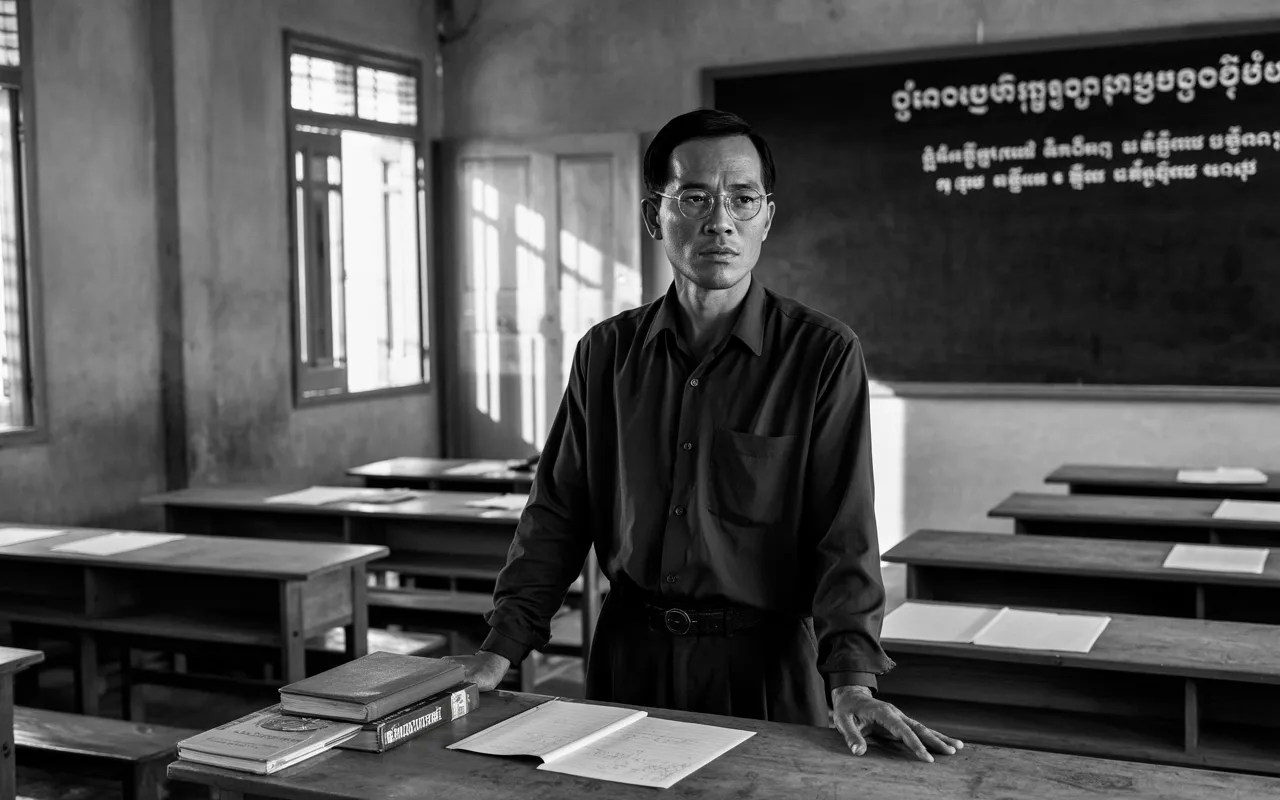
Long before the world knew him as a dictator, he was a quiet schoolteacher in Phnom Penh. Born as Saloth Sâr, he spent years teaching history, geography, and French literature to students who remembered him as calm, polite, and approachable. Ironically, the same man who once stood in front of classrooms teaching young minds would later destroy Cambodia’s education system and target teachers for execution.
His transformation from educator to revolutionary leader remains one of history’s most disturbing contradictions.
Cambodia During a Time of Political Change
To understand how Saloth Sâr became Pol Pot, it is important to look at Cambodia during the mid-20th century.
In the 1950s and early 1960s, Cambodia was experiencing major political and social changes. The country had recently gained independence from French colonial rule under the leadership of Norodom Sihanouk. While independence brought hope, it also created uncertainty.
The nation faced:
- Political instability
- Economic struggles
- Rising Cold War tensions
- Growing communist influence in Southeast Asia
Many young intellectuals believed traditional systems had failed ordinary people. Around the world, communist ideas were spreading rapidly, especially among students and activists who opposed colonialism and social inequality.
This environment deeply influenced Saloth Sâr during his formative years.
Early Life and Education of Saloth Sâr
Saloth Sâr was born in 1925 into a relatively comfortable farming family in rural Cambodia. Unlike many poor villagers, his family had connections to the royal court, which allowed him access to better educational opportunities.
As a child, he attended Buddhist schools before later studying at Catholic institutions run by the French colonial system. He was considered an average student academically but was known for being disciplined and respectful.
In 1949, he received a scholarship to study radio electronics in Paris, France. This opportunity changed the direction of his life forever.
How France Influenced His Political Beliefs
While living in Paris, Saloth Sâr became more interested in politics than academics. Instead of focusing on engineering studies, he spent most of his time reading communist literature and discussing revolutionary ideas with other Cambodian students.
France after World War II was filled with political debate. Socialist and communist movements were especially active among university students and intellectuals.
During this period, Saloth Sâr:
- Joined Marxist discussion groups
- Became associated with communist circles
- Studied the writings of Karl Marx and Mao Zedong
- Developed strong anti-colonial beliefs
He eventually became connected to members of the underground Cambodian communist movement.
Ironically, despite receiving a scholarship for technical education, he repeatedly failed his exams because he focused more on political activities than schoolwork. Eventually, his scholarship was canceled, and he returned to Cambodia in 1953 without completing his degree.
Beginning His Career as a Teacher
After returning home, Saloth Sâr needed stable employment. In 1956, he began teaching at Chamraon Vichea, a private school in Phnom Penh.
From 1956 to 1963, he taught:
- History
- Geography
- French literature
Former students later described him as soft-spoken, intelligent, and friendly. Nothing about his personality suggested he would later become one of the most feared dictators in history.
Many students admired him because he:
- Spoke calmly and clearly
- Treated students respectfully
- Explained lessons patiently
- Encouraged thoughtful discussion
Unlike strict or harsh teachers of the era, Saloth Sâr reportedly created a relaxed classroom atmosphere.
Several former pupils later expressed shock after learning their former teacher had become Pol Pot.
The Hidden Political Life Behind the Classroom
Although he appeared ordinary during the day, Saloth Sâr was secretly building revolutionary networks behind the scenes.
While teaching, he became a key member of the underground Communist Party of Kampuchea (CPK), which later became known as the Khmer Rouge.
His position as a teacher provided important advantages:
Access to Young Minds
As an educator, he could influence students intellectually and emotionally. He often discussed themes of inequality, injustice, and anti-colonial resistance.
Recruitment Opportunities
Some students and intellectuals were quietly recruited into communist circles through personal meetings and political discussions outside school hours.
Respectability
Being a teacher helped him avoid suspicion. To outsiders, he appeared educated and harmless rather than revolutionary.
This double life allowed him to strengthen his political connections while maintaining a normal public image.
Leaving the Classroom for Revolution
By 1963, Cambodia’s government had intensified crackdowns on leftist activists and suspected communists. Saloth Sâr feared arrest and disappeared from public life.
He fled Phnom Penh and entered the Cambodian jungle, where communist rebels were organizing armed resistance.
This marked the end of his teaching career and the beginning of his transformation into Pol Pot.
Over the next decade, he worked to:
- Expand guerrilla forces
- Build support among rural farmers
- Spread revolutionary ideology
- Strengthen the Khmer Rouge movement
During these years, he fully abandoned his old identity as Saloth Sâr and adopted the revolutionary name Pol Pot.
The Rise of the Khmer Rouge
In 1975, the Khmer Rouge captured Phnom Penh after years of civil war.
Once in power, Pol Pot introduced his radical vision called “Year Zero.” His goal was to erase Cambodia’s past and rebuild society into a purely agrarian communist state.
The regime forced millions of people out of cities and into labor camps. Money, religion, private property, and formal education were abolished.
Ironically, the former teacher became responsible for destroying the very education system he once worked within.
Why Teachers Became Targets
One of the cruelest contradictions of Pol Pot’s rule was his hatred of intellectuals and educators.
The Khmer Rouge believed educated people represented corruption, foreign influence, and social inequality.
Teachers were viewed as enemies because they were associated with:
- Knowledge
- Independent thinking
- Western education
- Foreign languages
Thousands of educators were executed during the Cambodian genocide.
Simply wearing glasses, speaking French, or appearing educated could result in death.
The French language that Pol Pot once taught in classrooms became dangerous under his regime.
Schools Turned Into Prisons
During Khmer Rouge rule, schools across Cambodia were shut down or repurposed.
One of the most infamous examples was Tuol Sleng Genocide Museum, also known as S-21.
Originally a high school, it was transformed into a torture and interrogation center where thousands of prisoners were imprisoned and executed.
This horrifying transformation symbolized the regime’s destruction of education and intellectual life.
The Cambodian Genocide
Between 1975 and 1979, approximately 1.7 to 2 million Cambodians died due to:
- Forced labor
- Starvation
- Disease
- Execution
- Torture
The genocide remains one of the deadliest political atrocities of the 20th century.
In 1979, Vietnamese forces invaded Cambodia and overthrew the Khmer Rouge government, ending Pol Pot’s rule.
The Psychological Contradiction of Pol Pot
Historians continue debating how a quiet teacher transformed into a brutal dictator.
Some experts believe several factors contributed:
Extreme Ideology
Pol Pot became obsessed with creating a “pure” communist society, regardless of human cost.
Isolation
Years spent in jungle warfare isolated him from ordinary human experiences and compassion.
Revolutionary Radicalism
The Khmer Rouge leadership believed violence was necessary to completely rebuild society.
Power and Control
Absolute power allowed paranoia and extremism to grow unchecked.
Still, the contrast remains deeply disturbing. Former students remembered him as kind and respectful—qualities completely opposite to the cruelty later associated with his regime.
Lessons From History
The story of Pol Pot’s teaching years serves as an important reminder that appearances can be misleading. History has shown that ordinary individuals can become involved in extraordinary violence under certain political and ideological conditions.
It also highlights the danger of extremist ideologies that reject education, intellectual freedom, and independent thought.
Teachers are often symbols of learning, curiosity, and progress. Under the Khmer Rouge, those same qualities became reasons for persecution.
The Legacy of Pol Pot Today
Today, Cambodia continues healing from the trauma caused by the Khmer Rouge era.
Museums, memorials, and survivor testimonies preserve the memory of victims and educate future generations about the dangers of authoritarianism and extremism.
Places like Choeung Ek Genocidal Center and Tuol Sleng stand as reminders of what happened during Pol Pot’s rule.
The story of his early life as a teacher adds another tragic layer to this history. It reveals how education and influence can be used either to inspire growth or manipulate society.
Final Thoughts
Before becoming the leader of the Khmer Rouge, Pol Pot was simply Saloth Sâr, a quiet teacher standing in front of a classroom in Phnom Penh. He taught history, geography, and French literature while secretly building a revolutionary movement that would later devastate Cambodia.
The irony is impossible to ignore. A man who once educated students eventually abolished schools, executed teachers, and destroyed intellectual life across an entire nation.
His story remains one of history’s most chilling transformations—from educator to dictator, from mentor to architect of genocide.