

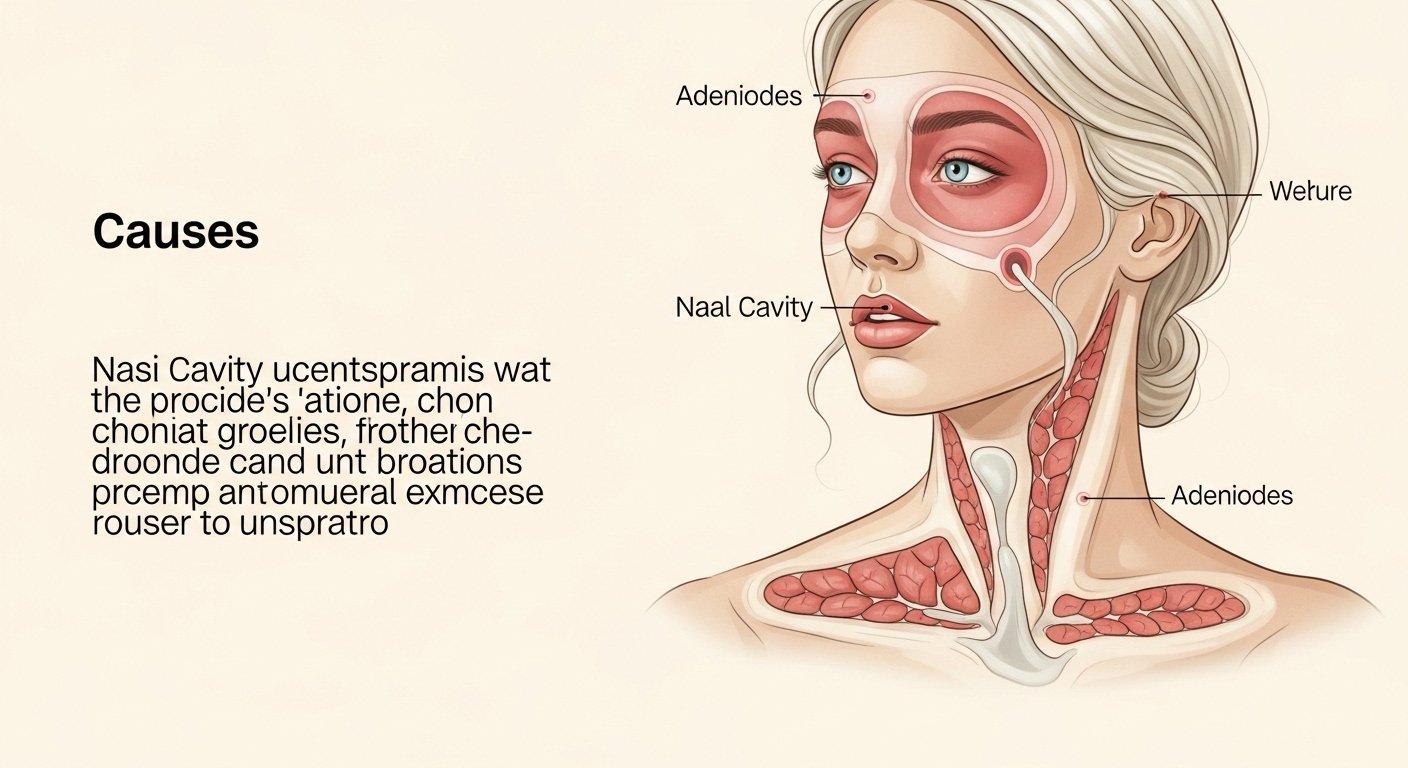
The adenoids are small patches of tissue located high up in the throat, right behind the nose. They work alongside your tonsils to catch germs that enter through the mouth and nose. Sometimes, these tissue patches get overwhelmed by bacteria or viruses and become infected. Doctors call this infection adenoiditis.
While anyone can get sick, adenoiditis primarily affects children. Adenoids naturally grow during early childhood to help the developing immune system fight off infections. As we enter the teenage years, these tissues begin to shrink. By adulthood, they often disappear entirely. Because adults rarely have large adenoids, this condition is most common in kids under the age of seven.
What Causes Adenoiditis?
Viruses cause the vast majority of adenoid infections. The rhinovirus, which brings on the common cold, and the adenovirus are frequent culprits. Bacteria can also cause the infection. The most common bacterial cause is Streptococcus, the same bacteria responsible for strep throat.
Spotting the Symptoms
When the adenoids become infected, they swell. Because you cannot see the adenoids just by looking into someone’s mouth, you have to watch for secondary signs of this swelling. Common symptoms include:
- A constantly stuffy or runny nose
- Breathing through the mouth instead of the nose
- Noisy breathing or snoring during sleep
- A dry, sore throat from breathing through the mouth
- Swollen glands in the neck
- Ear pain or a feeling of fullness in the ears
Potential Complications
You should always seek medical advice if you suspect adenoiditis. If left untreated, chronic swelling can lead to secondary health issues. The adenoids sit close to the Eustachian tubes, which drain fluid from the middle ear. Swollen adenoids can block these tubes, leading to painful and frequent middle ear infections. Over time, chronic ear infections can affect a child’s hearing.
Severe swelling can also block the airway during sleep. This causes obstructive sleep apnea, a condition where a person briefly stops breathing multiple times throughout the night. Sleep apnea leads to poor sleep quality, which can cause behavioral issues and trouble concentrating during the day.
How Doctors Diagnose It
To diagnose adenoiditis, a doctor will review the patient’s symptoms and perform a physical exam. They will check the throat, ears, and nose for signs of infection. To get a direct look at the adenoids, the doctor might use a small, flexible tube with a camera, called an endoscope. In some cases, they will order a simple X-ray to check the size of the adenoids or take a throat swab to test for bacteria.
Treatment Options
Treatment depends entirely on what caused the infection. If a virus is to blame, the illness will usually run its course in a week or two. You can manage viral adenoiditis with rest, plenty of fluids, and over-the-counter pain relievers to reduce discomfort.
If a bacterial infection caused the swelling, the doctor will prescribe a course of antibiotics. It is important to finish the entire prescription, even if the symptoms disappear quickly. Doctors might also suggest a steroid nasal spray to help bring down the swelling in the nasal passages.
For children who suffer from constant adenoid infections, chronic ear infections, or severe breathing problems, an ear, nose, and throat (ENT) specialist might recommend an adenoidectomy. This is a very common, straightforward surgical procedure to remove the adenoids completely.
Preventing Infection
You can prevent adenoiditis by following basic hygiene practices. Teach children to wash their hands frequently with soap and water. Encourage them to cover their mouths when they cough or sneeze, and avoid sharing cups or eating utensils with others. Staying away from people who are actively sick is the best way to keep the adenoids healthy and infection-free.